Madhya Pradesh HC Declares Bhojshala-Kamal Maula Mosque Site As A Temple
Madhya Pradesh High Court declares Bhojshala site a temple, ending dual worship arrangement.
advertisement
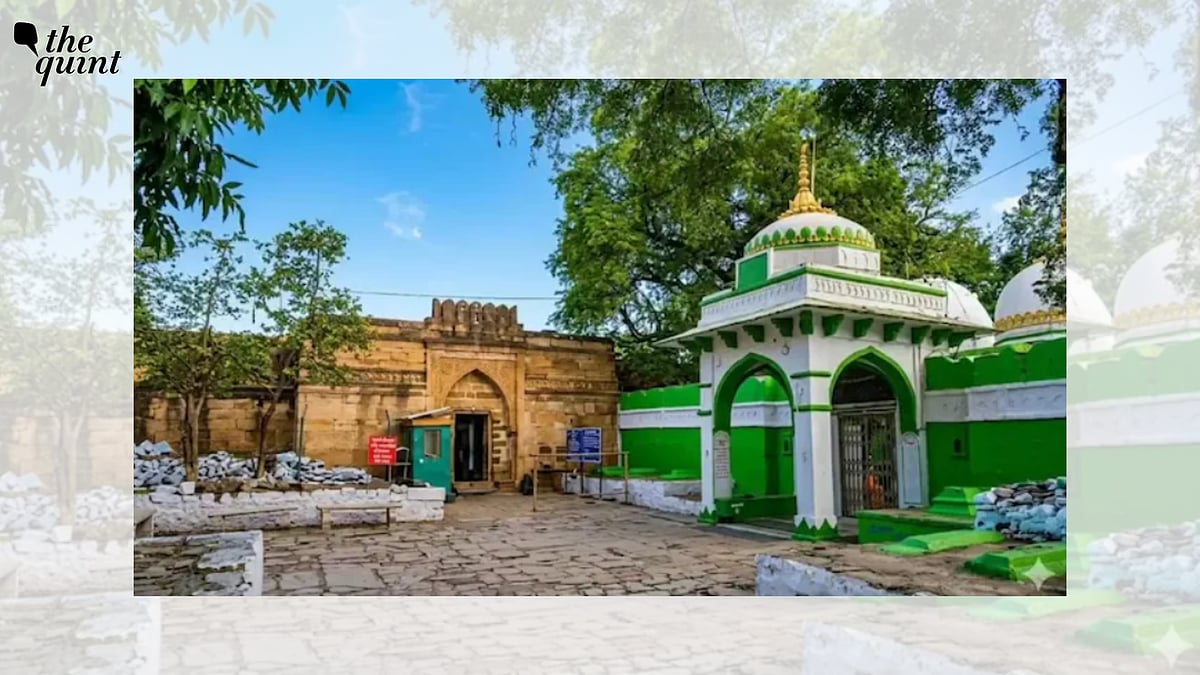
The Madhya Pradesh High Court has ruled that the religious character of the disputed Bhojshala-Kamal Maula Mosque complex in Dhar is that of a temple dedicated to Goddess Vagdevi (Saraswati). The court’s 242-page order, delivered on 15 May 2026, ended the 2003 arrangement that allowed Hindus to worship at the site on Tuesdays and Muslims to offer namaz on Fridays. The Archaeological Survey of India (ASI) was directed to regulate access and preserve the monument, while the state government was asked to consider allotting alternative land for a mosque.
According to The Indian Express, the day after the verdict, the Bhojshala complex saw a transformation as Hindu devotees gathered to offer prayers, recite Hanuman Chalisa, and decorate the site with marigold garlands. The ASI, which has managed the monument since 1952, was tasked with overseeing preservation and access. The court’s order also stated that Muslims would no longer be permitted to offer namaz at the site, and the state government should consider providing alternative land for this purpose in Dhar district.
As reported by coverage revealed, soon after the ruling, devotees began offering prayers at the Bhojshala premises under heavy security, with approximately 1,200 police personnel deployed. The court’s decision relied on the ASI’s scientific survey, which found that a structure from the Parmar dynasty predated the mosque and that the current structure incorporated reused temple components. The court also suggested that the Union government “may consider” efforts to repatriate a Saraswati idol currently housed in the British Museum, London, for reinstallation at the Bhojshala complex.
The High Court’s judgment clarified that it was not a decision on the title of the property but rather a determination of the site’s religious character based on historical literature, architectural features, and the ASI survey. Analysis showed that the court found no evidence that the disputed area was Waqf property or that a mosque existed at the site prior to 1034 AD. The court also addressed concerns about the fairness of the ASI survey, stating that the process was conducted scientifically and impartially, with representatives from all parties present during the proceedings.
“We find that the survey was conducted by adopting (a) scientific method in a fair and impartial manner…. The method which has been adopted by the experts was as per their expertise,” the court stated.
Political and community reactions were immediate. Reporting indicated that All India Majlis-e-Ittehadul Muslimeen (AIMIM) chief Asaduddin Owaisi criticised the judgment as “erroneous,” alleging that it ignored constitutional safeguards, historical records, and the Places of Worship Act. Owaisi compared the ruling to the Babri Masjid-Ram Mandir verdict and expressed concern about its implications for minority worship rights. Congress leaders and Muslim organisations announced plans to challenge the verdict in the Supreme Court, while the Jain side also indicated intentions to approach the apex court, maintaining their claim of a Jain temple at the site.
On the ground, further details emerged of heightened security and mixed emotions among local residents. Hindu petitioners and activists celebrated the verdict as a significant victory after years of legal and political campaigning. Meanwhile, members of the Muslim community expressed disappointment and uncertainty about future worship at the historic site, with some stating their intention to continue seeking access through legal means.
“We have been praying here for hundreds of years and do not need permission,” said Abdul Samad, president of the Maulana Kamal Welfare Society, adding, “We are studying the order and will work with the ASI to understand how namaz can continue.”
The court’s order also addressed claims from the Jain community, noting that the discovery of Jain idols within the premises was not unusual given the historical overlap between Jain and Hindu traditions. Further examination of the ASI’s findings indicated that the presence of Jain artefacts did not alter the overall religious character of the site as determined by the court.
In the aftermath of the verdict, subsequent developments included increased police presence and the implementation of crowd control measures to maintain order. Local authorities warned against the circulation of objectionable content on social media and emphasised the need for compliance with the court’s directives as the transition to exclusive Hindu worship at the Bhojshala complex proceeded.
Note: This article is produced using AI-assisted tools and is based on publicly available information. It has been reviewed by The Quint's editorial team before publishing.