'Communal Agenda & Blatant Lies': Kerala CM Pinarayi Vijayan on ‘Kerala Story 2’
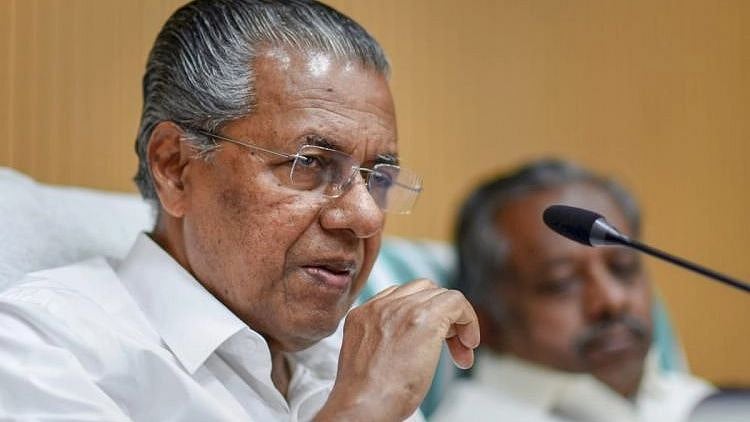
Kerala CM Pinarayi Vijayan criticised 'The Kerala Story 2' for alleged false narratives and communal disharmony.
advertisement
The trailer and upcoming release of 'The Kerala Story 2' have led to significant controversy in Kerala. Chief Minister Pinarayi Vijayan has publicly condemned the film, alleging it spreads false propaganda and threatens the state’s secular fabric. A petition has also been filed in the Kerala High Court seeking to halt the film’s release, citing concerns over communal disharmony and misrepresentation of Malayalis. The Central Board of Film Certification and the film’s producers have been asked to respond to the legal challenge.
According to Bar and Bench, the petition alleges that the film’s teaser and trailer depict women from multiple states but label the narrative as 'The Kerala Story', thereby associating terrorism and forced conversion exclusively with Kerala. The petitioner argues this creates a misleading regional association and could incite communal tensions, potentially infringing on constitutional rights and public order.
As reported by Hindustan Times, Pinarayi Vijayan urged the public to reject the film, stating that Kerala had already seen through the “communal agenda and blatant lies” of the first installment. He emphasised the need for unity against attempts to portray Kerala as a hub of terror, asserting, “The truth shall always prevail.”
As highlighted by Deccan Herald, Vijayan described the sequel as a renewed attempt to malign Kerala and stoke communal tensions. He criticised the selective freedom granted to what he called hate-driven narratives, while dissenting artistic expressions face censorship. The original film, released in 2023, was also widely challenged for its portrayal of Kerala as a recruitment ground for extremist groups.
“Having already seen through the communal agenda and blatant lies of the first part, Kerala will once again reject this attempt to demonise our secular fabric with contempt,” Vijayan stated.
As noted in an article by Siasat, Vijayan questioned how films that he described as “poisonous works produced to spread division and hatred in society” are allowed to be screened, while other films are barred. He asserted that such portrayals are attempts to destroy the peace and tranquillity of Kerala, a state known for religious harmony and sustainable development.
Vijayan further urged the public to protect Kerala’s progressive, democratic, and secular foundations from divisive narratives. He called on citizens to reject hate campaigns and uphold the state’s reputation for communal amity and fraternity, stating that Kerala’s achievements in development and quality of life are rooted in its social cohesion.
The controversy has also led to political responses beyond the Chief Minister’s office. Other political leaders have echoed concerns about the film’s potential to incite division, with calls to reject hate campaigns and uphold truth, secularism, and brotherhood. The trailer’s content, including warnings about India’s future and depictions of forced conversions, has intensified the debate.
“It is the onus of each one of us to prove that Kerala’s secular foundation cannot be shaken by false propaganda,” Vijayan said, urging unity against divisive elements.
Public reactions remain divided, with some defending the film as representing true stories and others criticising it for misrepresenting facts. Producer statements claim the film is based on real cases, but critics argue that its narrative risks undermining Kerala’s secular image and could provoke social unrest.
Legal proceedings are ongoing, with the Kerala High Court set to hear the matter further. The outcome may determine whether the film’s release will proceed as scheduled or face modifications to address concerns of regional vilification and communal disharmony.
Note: This article is produced using AI-assisted tools and is based on publicly available information. It has been reviewed by The Quint's editorial team before publishing.