Jaishankar Unveils India’s ‘Humanity-First’ BRICS 2026 Strategy
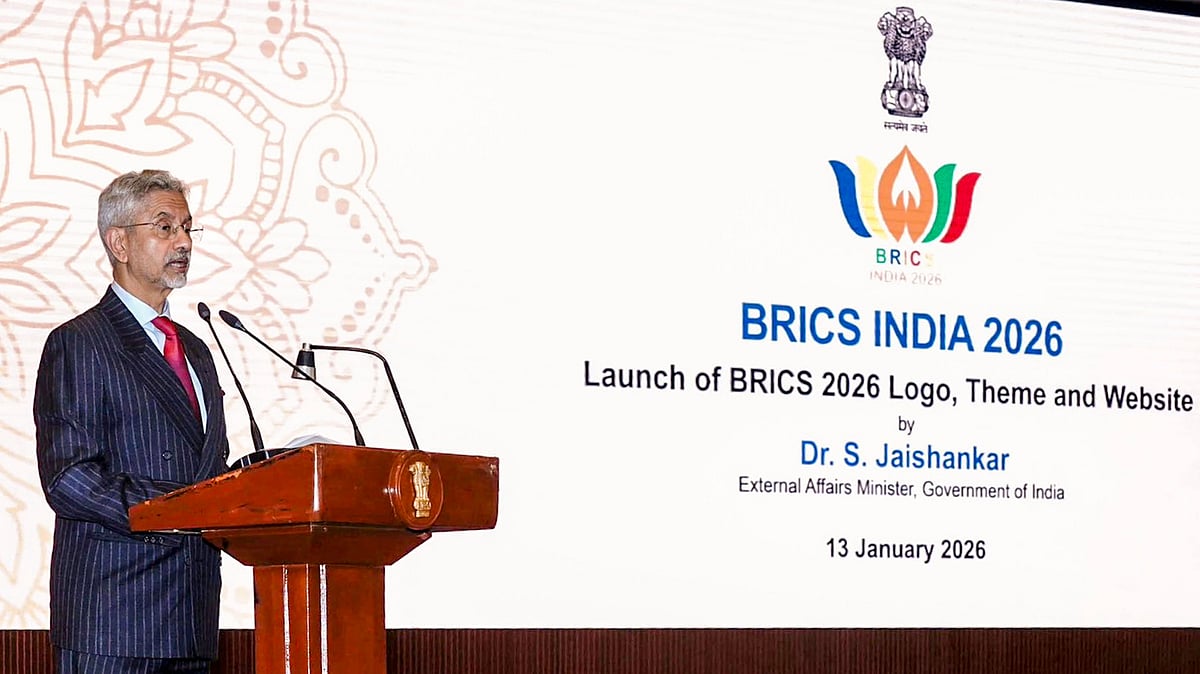
External Affairs Minister S. Jaishankar addressed the launch of preparations for BRICS India 2026 in New Delhi.
advertisement
India assumed the presidency of BRICS for 2026, with External Affairs Minister S. Jaishankar announcing a ‘humanity-first’ and ‘people-centric’ approach as the guiding theme. The official logo, website, and summit tagline were unveiled in New Delhi, marking the start of India’s chairship. The 2026 summit will coincide with the 20th anniversary of BRICS, and India’s leadership aims to promote resilience, innovation, cooperation, and sustainability across member nations.
According to The Hindu, Jaishankar emphasised that India’s chairship will focus on strengthening capacities, fostering innovation, and ensuring sustainable development for all. The summit’s logo, a lotus with a ‘Namaste’ gesture, was selected through a national contest and symbolises unity among BRICS members. The official website will provide updates on meetings, initiatives, and outcomes throughout the year.
As reported by The Indian Express, Jaishankar addressed the complexities of the current global environment, including geopolitical uncertainties, economic challenges, and climate risks.
India’s approach to the 2026 BRICS presidency will mirror its G20 Presidency model, with meetings and events planned across all 28 states and nine Union Territories. Coverage revealed that the summit will include around 100 meetings, including ministerials, forums, and working groups in 60 cities. Senior leaders from all BRICS member states and partner countries are expected to attend the summit in New Delhi.
India faces external economic pressures, including a 25% penalty tariff from the United States on oil imports from Russia, a fellow BRICS member. Analysis showed that India and Brazil are both subject to similar tariffs, highlighting the need for BRICS to build structural strengths capable of weathering global shocks. Jaishankar noted that India will work with BRICS partners to enhance resilience in agriculture, health, disaster risk reduction, energy, and supply chains.
Jaishankar also highlighted the importance of leveraging new and emerging technologies to address socio-economic challenges, particularly for developing nations. Enhanced cooperation in start-ups, MSMEs, and technology sectors is expected to contribute to a more equitable world as details emerged.
“Enhanced cooperation in areas such as start-ups, MSMEs, and emerging technologies can contribute meaningfully to building a more equitable world,” Jaishankar said.
The operational framework for BRICS 2026 includes two foreign ministers’ meetings, a national security advisers’ meeting, several sherpa meetings, and approximately 20 ministerial meetings. Further updates confirm that key ministerial meetings will be held in cities such as Bangalore, Hyderabad, Chennai, Chandigarh, Ahmedabad, and Lucknow.
“India will seek to make its chairship inclusive, practical, people-centred, and outcome-oriented,” Jaishankar affirmed.
Note: This article is produced using AI-assisted tools and is based on publicly available information. It has been reviewed by The Quint's editorial team before publishing.