Iran Fires Missiles At US Base In Jordan After Trump Orders Strikes Near Hormuz
Iran launched missiles at US bases in Jordan; Jordanian military intercepted five, no casualties reported.
advertisement
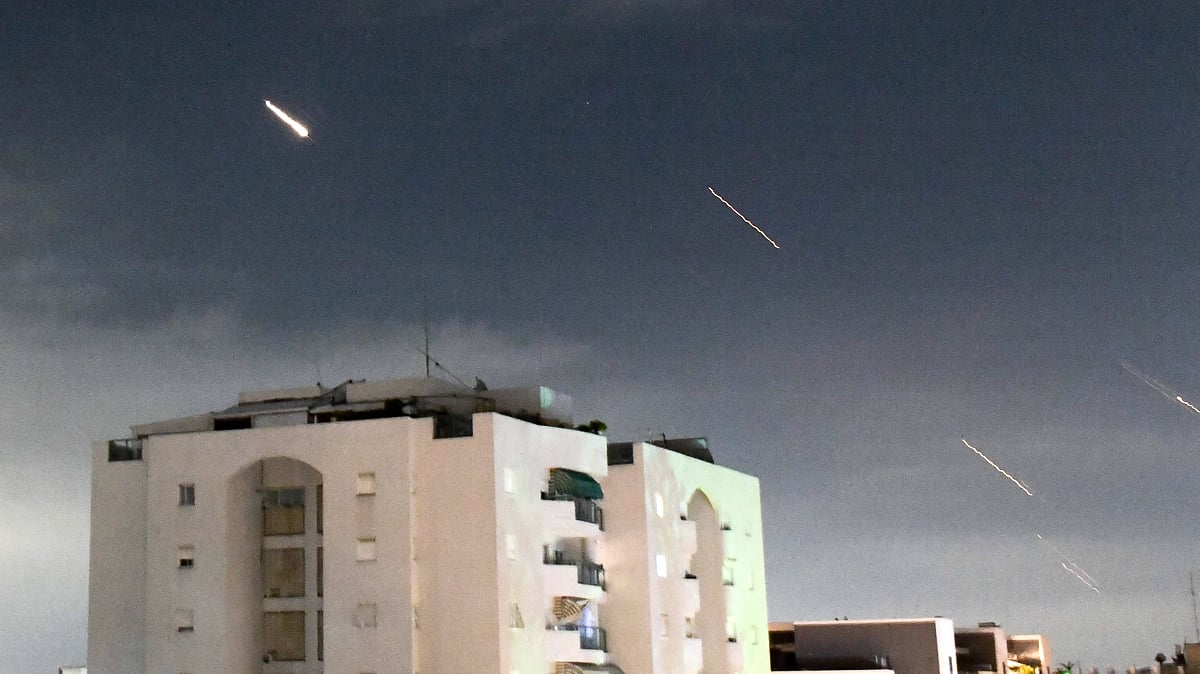
On 10 June 2026, Iran launched a series of missile attacks targeting US military bases across the Gulf region, including an air base in Jordan. The Jordanian armed forces reported intercepting five missiles fired from Iran toward the al-Azraq area, with no injuries or material damage resulting from the debris. The incident followed US airstrikes on Iranian positions after the downing of a US Army helicopter near the Strait of Hormuz.
According to Hindustan Times, air raid sirens were activated in Jordan, Kuwait, and Bahrain as Iran retaliated against US strikes. Iran stated it had targeted an air base in Jordan hosting US forces, and Jordanian officials later confirmed that five missiles were intercepted by their military.
As reported by Deccan Herald, the Jordanian military stated that the five intercepted missiles were launched from Iran toward the al-Azraq area, and that debris from the interception operation fell on Jordanian territory without causing injuries or property damage. Iran’s Revolutionary Guards claimed responsibility for targeting four sites at the US al-Azraq base in Jordan using long-range missiles.
As highlighted by The Guardian, Iranian state media reported that the Muwaffaq Salti airbase in Jordan, which hosts US F-35 fighter jets and other aircraft, was among the targets. However, neither Jordan nor the US initially acknowledged the attack, though Jordanian military statements later confirmed the interception of missiles.
According to The Indian Express, the missile attacks on US bases in Bahrain, Kuwait, and Jordan marked a significant escalation in hostilities, challenging the fragile ceasefire that had been in place since April. Both Bahrain and Kuwait also activated missile-alert sirens and air defences in response to the Iranian strikes.
“Jordanian armed forces said on Wednesday they intercepted and shot down five missiles launched from Iran toward al-Azraq area in Jordan,”
Further details indicated that the escalation followed US military strikes on Iranian positions after President Donald Trump accused Tehran of shooting down a US Apache helicopter. The US military described its operation as a “proportional response” to recent attacks on American forces and commercial shipping.
Regional financial markets responded to the conflict, with market analysis showing that Asian stocks fell sharply after the exchange of fire between the US and Iran. Oil prices experienced volatility, reflecting uncertainty over the potential for further escalation.
In the context of ongoing diplomatic efforts, reporting indicated that the US and Iran had previously agreed to a ceasefire on 8 April 2026, but recent hostilities have undermined prospects for a permanent resolution. The US military’s Central Command stated that its strikes on Iran were conducted in self-defence and in response to attacks on US forces and international commercial ships.
“The military added that debris from the interception operation fell on Jordanian territory but caused no injuries or material damage.”
In summary, coverage revealed that the missile exchange between Iran and the US, including the attempted strike on the US base in Jordan, has heightened tensions in the region and raised concerns about the stability of the existing ceasefire.
Note: This article is produced using AI-assisted tools and is based on publicly available information. It has been reviewed by The Quint's editorial team before publishing.