India-EU Finalise Free Trade Agreement Covering 2 Billion People, 25% Global GDP
The deal will eliminate or reduce tariffs on over 90% of goods traded between India and the EU
advertisement
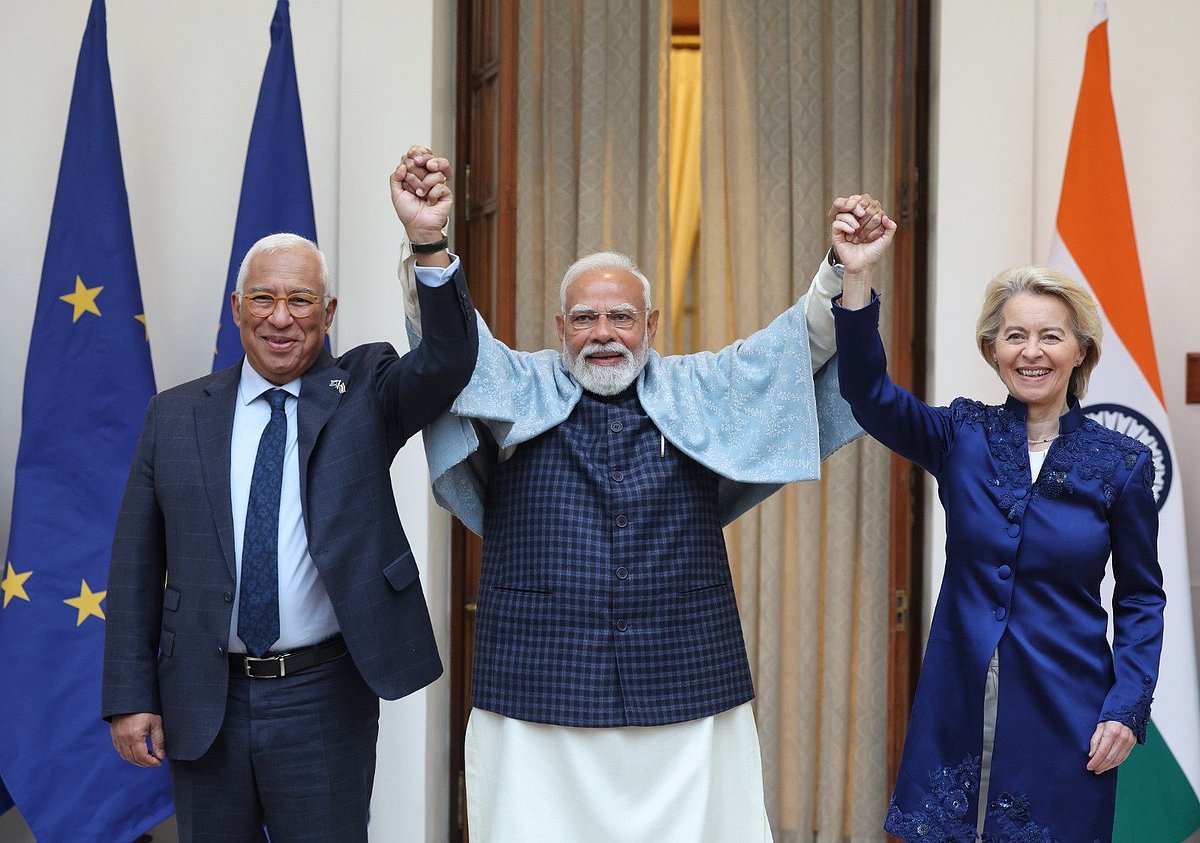
India and the European Union have finalised a landmark Free Trade Agreement, concluding negotiations that began in 2007. The agreement, announced on 27 January 2026, is set to cover a market of nearly two billion people and account for 25% of global GDP. The deal will eliminate or reduce tariffs on over 90% of goods traded between India and the EU, with implementation expected after legal and parliamentary approvals.
According to Hindustan Times, the agreement will save the European Union approximately €4 billion annually in duties, as India has agreed to cut or eliminate tariffs on nearly 97% of goods imported from Europe. Prime Minister Narendra Modi described the deal as a “perfect” example of partnership between two major economies and emphasised its potential to boost manufacturing and services sectors in India.
As reported by The Hindu, Modi highlighted that the agreement represents 25% of global GDP and one-third of global trade. He stated that the deal would benefit sectors such as textiles, gems and jewellery, leather, and footwear, and would strengthen global supply chains. Modi also noted that the agreement would enhance investor confidence in India.
As highlighted by Siasat, the PM Modi congratulated stakeholders in key sectors and reiterated that the agreement is being discussed as the “mother of all deals” due to the scale of opportunities it brings for both Indian and European citizens. The agreement is expected to complement India’s existing trade pacts with Britain and the European Free Trade Association.
The FTA is also expected to liberalise norms for services trade, including telecommunications, transportation, accounting, and auditing.
“This is a perfect example of a partnership between two major economies of the world...This agreement represents 25 per cent of the global GDP and 1/3rd of global trade,” Prime Minister Narendra Modi said.
Negotiations for the agreement were relaunched in June 2022 after a nine-year hiatus, and the finalisation was confirmed during the 16th India-European Union Summit. Analysis showed that the deal will remove tariff and non-tariff barriers on more than 90% of Indian goods, with sectors such as textiles, leather, chemicals, electronics, and jewellery expected to benefit the most.
European Commission President Ursula von der Leyen described the agreement as a “historic moment” and emphasised the creation of a free trade zone of two billion people. Further details indicated that the European Union remains India’s largest trading partner, with bilateral trade in goods valued at $135 billion in 2023–24.
The agreement comes at a time of global trade disruptions, including recent tariff increases by the United States. Reporting indicated that the India-EU FTA is seen as a strategic counterweight to protectionist measures, with the potential to diversify India’s export markets and reduce dependency on other major economies.
“We have created a free trade zone of two billion people, with both sides set to benefit. This is only the beginning. We will grow our strategic relationship to be even stronger,” Ursula von der Leyen stated.
The agreement will take effect after legal review and ratification by the EU Parliament and India’s Union Cabinet. As details emerged, the FTA covers 24 chapters, including trade in goods, services, and investment, and is expected to further strengthen economic integration between India and the EU’s 27 member states.
Note: This article is produced using AI-assisted tools and is based on publicly available information. It has been reviewed by The Quint's editorial team before publishing.