'Trouble Miyas...Practise Politics of Polarisation If We Want To Live': Himanta
Himanta Biswa Sarma’s remarks on Miya Muslims and electoral rolls spark political and legal controversy in Assam.
advertisement
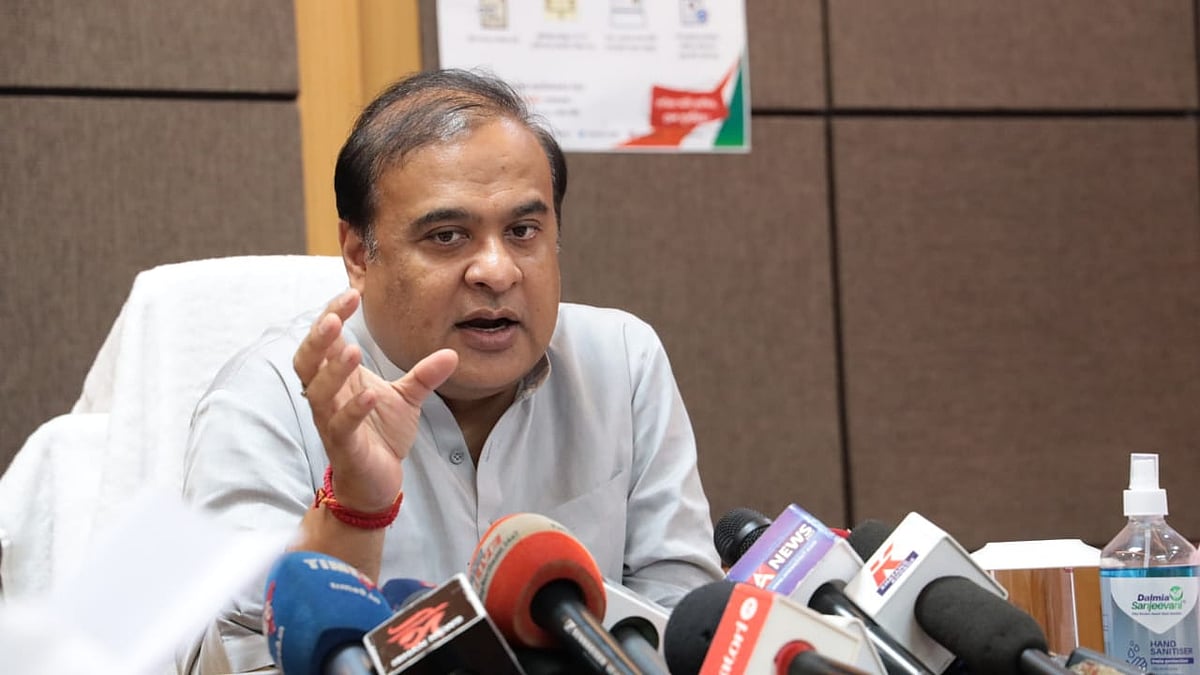
Assam Chief Minister Himanta Biswa Sarma has made a series of public statements targeting Miya Muslims, particularly in the context of the ongoing revision of electoral rolls in Assam. He has asserted that it is his responsibility to ensure the removal of what he describes as “illegal” voters, specifically referencing Bengali-origin Muslims. These remarks have led to significant political backlash, legal complaints, and widespread debate ahead of the upcoming state Assembly elections.
According to Scroll, Sarma defended his statements by citing a 2005 Supreme Court order, arguing that acknowledging demographic changes in Assam is not an act of hatred or communalism but a recognition of a longstanding issue. He stated that the government’s actions are not directed against any religion or Indian citizen, but are intended to protect Assam’s identity and security.
As reported by The Indian Express, Sarma’s remarks included instructions to BJP workers to file mass complaints against the inclusion of Bengali-origin Muslims in voter lists and to “trouble Miyas” in daily life. He described the upcoming elections as a “civilisational fight” and suggested that Miya Muslims should not be allowed to vote in Assam. These statements have been met with strong opposition, with critics alleging that such rhetoric is being used to polarise voters.
A formal complaint was filed by human rights activist Harsh Mander, who accused Sarma of promoting hatred and discrimination against Bengali-speaking Muslims. The complaint, lodged at Hauz Khas Police Station in New Delhi, calls for an FIR under relevant sections of the Bharatiya Nyaya Sanhita, 2023, and urges immediate action to prevent further such statements during the voter revision process.
Statements made by Sarma at an official event included open calls for the harassment of Miya Muslims, suggesting that people should underpay them and that the police would protect those who do so. He reiterated that the BJP is “directly against Miyas” and that it is his responsibility to make the community “suffer.” These comments have drawn condemnation from opposition leaders and civil society groups.
“We are ensuring that they cannot vote in Assam,” Sarma said, referring to the ongoing revision of electoral rolls. “Only if they face troubles will they leave Assam.”
Coverage revealed that BJP workers have filed over five lakh complaints against suspected foreigners during the special revision of electoral rolls. Sarma described this as a “national duty” and emphasised that the responsibility to file such complaints extends beyond the BJP to all parties and organisations, though he noted that no other groups had participated.
In the middle of the controversy, reporting indicated that the Election Commission is conducting a special revision in Assam, separate from the Special Intensive Revision (SIR) being implemented in other states. The process involves claims and objections to inclusions and deletions in the draft electoral rolls, with the final list scheduled for publication on 10 February 2026.
Recent editorials have noted that Sarma’s rhetoric is consistent with his political strategy since joining the BJP, but his current actions—encouraging party workers to file objections and “trouble” a specific demographic—raise concerns about the integrity of the electoral process and adherence to constitutional norms.
“For the next 30 years, we have to practice politics of polarisation if we want to live,” Sarma stated, as cited in multiple reports.
Further analysis underscored that Sarma’s use of the term “Miya” and his conflation of Bengali Indians with Bangladeshis have flattened complex identities and blurred the distinction between legal citizens and undocumented migrants. Critics argue that such statements undermine the constitutional responsibilities of his office and risk eroding public trust in the electoral process.
Note: This article is produced using AI-assisted tools and is based on publicly available information. It has been reviewed by The Quint's editorial team before publishing.