ECI Schedules Special Intensive Revision In 22 States, UTs From April
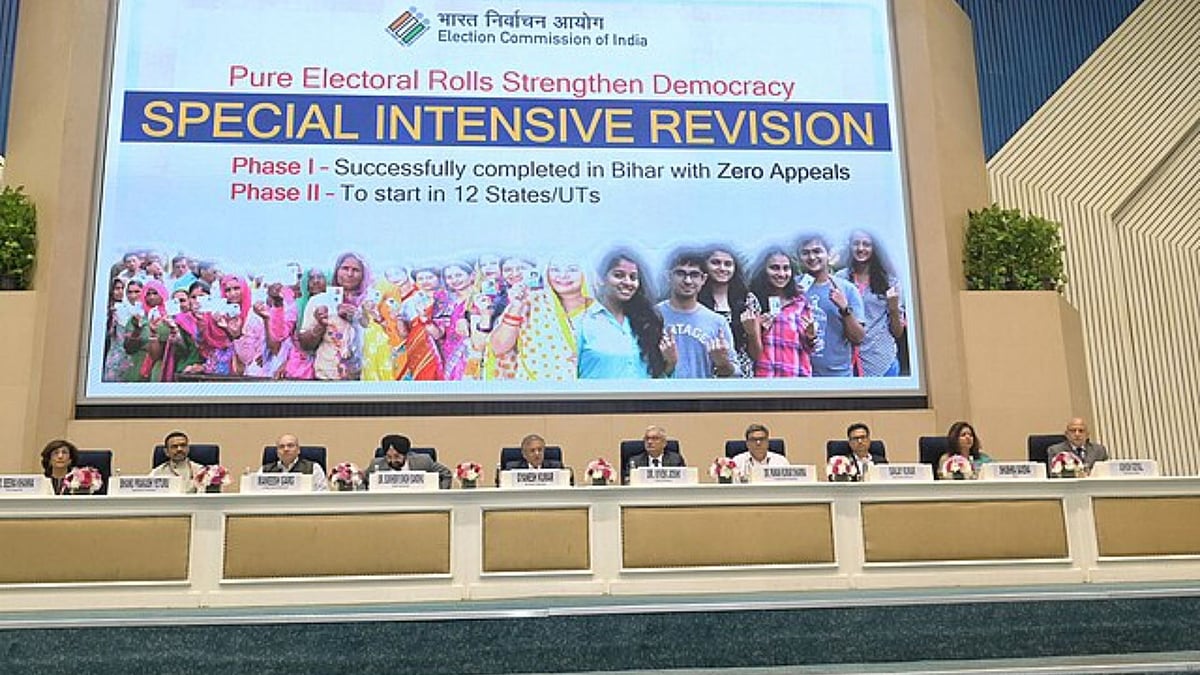
ECI to launch Special Intensive Revision of electoral rolls in 22 states and UTs from April 2026.
advertisement
The Election Commission of India (ECI) will commence the Special Intensive Revision (SIR) of electoral rolls in 22 states and Union Territories, including Delhi, from April.
This phase follows the near completion of similar exercises in 13 other states and UTs. The ECI has directed Chief Electoral Officers to complete all preparatory work in a time-bound manner to ensure the revision proceeds as scheduled.
According to The News Minute, the states and UTs included in this round are Andhra Pradesh, Arunachal Pradesh, Chandigarh, Dadra and Nagar Haveli and Daman and Diu, Haryana, Himachal Pradesh, Jammu and Kashmir, Jharkhand, Karnataka, Ladakh, Maharashtra, Manipur, Meghalaya, Mizoram, Nagaland, NCT of Delhi, Odisha, Punjab, Sikkim, Tripura, Telangana, and Uttarakhand. The ECI’s advisory emphasised the need for timely completion of preparatory activities, including training and document verification.
As reported by The Indian Express, the SIR process requires all registered electors to submit enumeration forms, with certain categories needing additional documents to establish eligibility, such as proof of citizenship. The ECI has not conducted a full intensive revision since the early 2000s, instead relying on annual updates and pre-election revisions. The current SIR order was challenged in the Supreme Court, with the judgment still pending.
As highlighted by Siasat, the ECI has flagged delays in document processing in some regions during earlier SIR phases. In West Bengal, several electoral officers were found responsible for not uploading voter documents on time, potentially affecting the scrutiny process and final roll publication. The Commission has indicated that disciplinary action will be taken against those found guilty of deliberate delays.
As noted in an article by The Hindu, the ECI communicated to state poll authorities that the SIR is “expected” to start from April. The process is part of a nationwide effort to update and verify voter lists, aiming to ensure accuracy and compliance with legal requirements.
Coverage revealed that this phase will impact approximately 373.9 million voters, representing about 38% of India’s electorate. The SIR involves door-to-door verification, document scrutiny, and systematic removal of duplicate, deceased, or shifted voters under the Representation of the People Act, 1950. Preparatory measures include rationalisation of polling stations and training of booth-level officers.
Preparations in Delhi are reportedly complete as officials confirmed that staff training and voter list mapping have been finalised. Booth-level officers will conduct house-to-house visits, distributing and collecting enumeration forms and verifying documents as required.
In Punjab, the SIR is particularly significant ahead of the 2027 assembly elections as analysis showed that a large section of voters may be exempt from fresh document submission after verification. Political parties have instructed their cadres to monitor the process closely to prevent arbitrary deletions and assist genuine voters facing deletion notices.
Recent SIR phases in other states have seen substantial deletions and flagged discrepancies as details emerged, with millions of names removed or flagged for further verification. The ECI maintains that these measures are necessary to uphold the integrity of the electoral rolls.
Note: This article is produced using AI-assisted tools and is based on publicly available information. It has been reviewed by The Quint's editorial team before publishing.