Delhi Air Pollution: Grap-3 Restrictions Lifted as Air Quality Improves in NCR
The AQI of Delhi has shown significant improvement owing to strong winds and favourable meteorological conditions.
advertisement
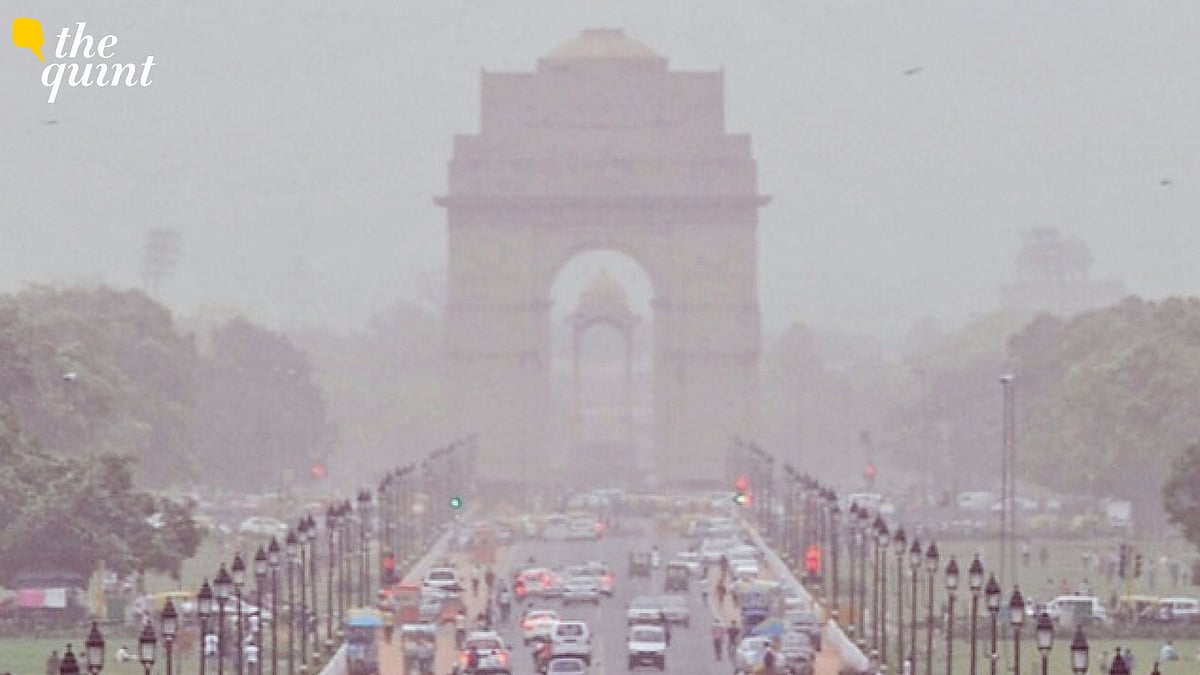
Delhi’s air quality improved significantly on 3 January, with the city’s average Air Quality Index (AQI) dropping to 236, classified as ‘Poor’, from 380, which was in the ‘Very Poor’ category the previous day.
The Commission for Air Quality Management (CAQM) revoked Stage III restrictions of the Graded Response Action Plan (GRAP) in Delhi and the National Capital Region (NCR).
However, restrictions under Stages I and II remain in effect. Meteorological forecasts indicate the possibility of fog and a potential decline in air quality in the coming days.
According to The Indian Express, the CAQM’s decision followed a marked improvement in AQI across Delhi and adjoining NCR cities, aided by westerly winds with speeds up to 15 kmph that helped disperse pollutants. The order stated that while Stage III curbs are lifted, Stages I and II restrictions will continue, and the air quality is forecast to remain in the ‘Poor’ to ‘Very Poor’ range in the coming days.
As reported by Scroll, the Stage III restrictions, which included bans on non-essential construction, closure of stone crushers, and shifting primary schools to hybrid mode, had been in place since 24 December. The CAQM cited significant AQI improvement as the basis for revoking these measures, but noted that anti-pollution actions under earlier stages remain necessary.
This report highlighted, since October, authorities impounded 7,789 end-of-life vehicles in Delhi for violating GRAP III and IV restrictions. The Transport department also issued over 12 lakh challans for pollution-related violations, and a penalty of Rs 10,000 is imposed for vehicles without a valid Pollution Under Control Certificate (PUCC).
“The AQI of Delhi has shown significant improvement owing to strong winds and favourable meteorological conditions. Further, the forecast by IMD/IITM predicts the AQI to remain in the 'Poor' to 'Very Poor' category in the coming days,” the CAQM order stated.
The improvement in AQI was observed not only in Delhi but also in neighbouring cities. Noida recorded an AQI of 229, down from 367, and Gurgaon’s AQI dropped to 187 from 312. However, forecasts indicate that with weakening wind speeds and less favourable ventilation, air quality may deteriorate again from 5 January 2026 as this report noted.
“The air quality will remain in the ‘poor to very poor’ category in coming days,” the CAQM panel quoted the India Meteorological Department and the Indian Institute of Tropical Meteorology as having forecast.
On 3 January 2026, the maximum temperature in Delhi was 17.4°C, 1.9 degrees below normal, while the minimum was 9.1°C, 2.2 degrees above the seasonal average. The India Meteorological Department forecasted colder nights and a likely fall in minimum temperatures by 2-3°C over the next two days this report mentioned.
Note: This article is produced using AI-assisted tools and is based on publicly available information. It has been reviewed by The Quint's editorial team before publishing.