Delhi Reimposes GRAP 4 Amid 'Severe' AQI And Dense Fog
Delhi’s AQI climbed from 354 on Friday evening to 434 on Saturday night.
advertisement
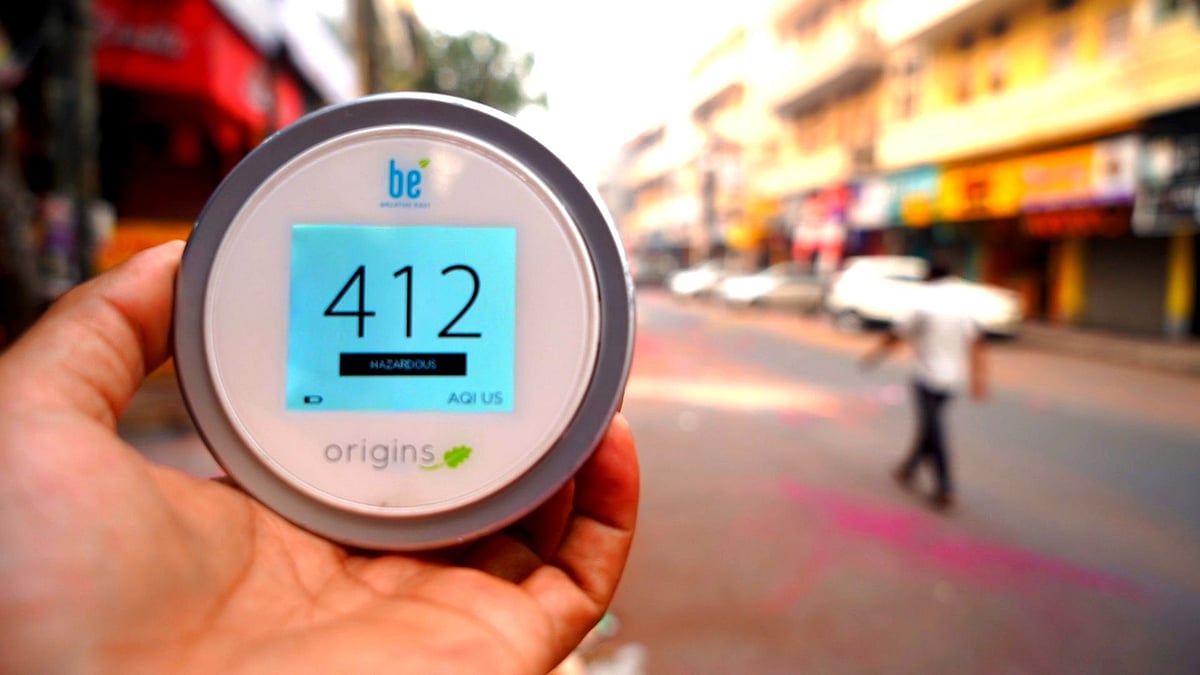
Delhi’s air quality index (AQI) surged past 400, entering the “severe” category for the first time in 2026.
The Commission for Air Quality Management (CAQM) responded by reimposing Stage 4 restrictions under the Graded Response Action Plan (GRAP) on 17 January.
The city also experienced dense fog and below-normal minimum temperatures, leading to significant disruptions in daily life and travel.
According to Hindustan Times, Delhi’s AQI climbed from 354 at 4 pm on Friday to 400 by 4 pm on Saturday, then surged to 434 by 11 pm.
The CAQM convened an urgent meeting as calm winds and high humidity trapped pollutants, causing the sharp increase. The air quality is forecast to remain “severe” through Sunday, with only marginal improvement expected in the following days.
As reported by Scroll, Stage 4 restrictions include a ban on truck entry into Delhi, suspension of all construction activities, and a shift to hybrid learning for most school classes.
The commission cited calm winds and stable atmospheric conditions as primary factors for the pollution spike.
The AQI reached 439 at 7:05 am on Sunday, with authorities warning of hazardous health impacts even for healthy individuals.
As highlighted by The Indian Express, government, municipal, and private offices in Delhi are now required to operate with 50 percent staff working from home.
Only electric, CNG, LNG, and BS-VI diesel trucks are permitted entry, while all construction and demolition activities are halted.
The Indian Institute of Tropical Meteorology forecasted that low wind speeds would continue to restrict pollutant dispersion, keeping air quality in the “severe” range for at least another day.
“The AQI of Delhi, which was recorded as 400 on Saturday at 4 pm, exhibited a sharp increasing trend and has been recorded at 428 at 8 pm, owing to a western disturbance, highly unfavourable weather and meteorological conditions, and lack of dispersal of pollutants,” a CAQM official stated.
As noted in an article by Financial Express, fuel stations in Delhi are now required to supply fuel only to vehicles with a valid Pollution Under Control Certificate (PUCC). Vehicles found refuelling without a PUCC face penalties.
Only emergency vehicles and those carrying essential goods are exempt from these restrictions. Non-compliant vehicles registered outside Delhi are barred from operating in the city during Stage 4.
Morning updates indicated that the AQI reached 439 at 7 am, with several monitoring stations recording values above 460.
Minimum temperatures remained between 5 and 7°C, below normal by up to 3°C. Authorities urged residents, especially vulnerable groups, to limit outdoor activities and follow health advisories due to the persistent hazardous air quality.
Dense fog further compounded the situation as visibility dropped to zero at Safdarjung for several hours and to 100 metres at Palam. The city’s AQI continued to rise, reaching 444 at 9 am on Sunday.
The Air Quality Early Warning System predicted only marginal improvement, with air quality likely to remain “very poor” in the coming days.
“Delhi’s air quality is likely to be in the severe category from January 17 till 18. The air quality is likely to be in the ‘very poor’ category from January 19 till 20,” the EWS stated.
Visibility levels across key locations were severely affected, with zero visibility at Safdarjung and 100 metres at Palam.
The India Meteorological Department issued a yellow alert for dense fog, and minimum temperatures in some areas dropped to 5°C. Airlines issued advisories warning of possible delays due to the weather conditions.
Flight operations at Delhi airport were impacted as airlines and airport authorities activated low-visibility procedures. Passengers were advised to check flight status and plan extra travel time.
Note: This article is produced using AI-assisted tools and is based on publicly available information. It has been reviewed by The Quint's editorial team before publishing.