Delhi Court Acquits 9 Muslims In 2020 Riots, Citing Weak Witness Testimonies
Delhi court acquits nine accused in 2020 riots case due to unreliable witness testimonies.
advertisement
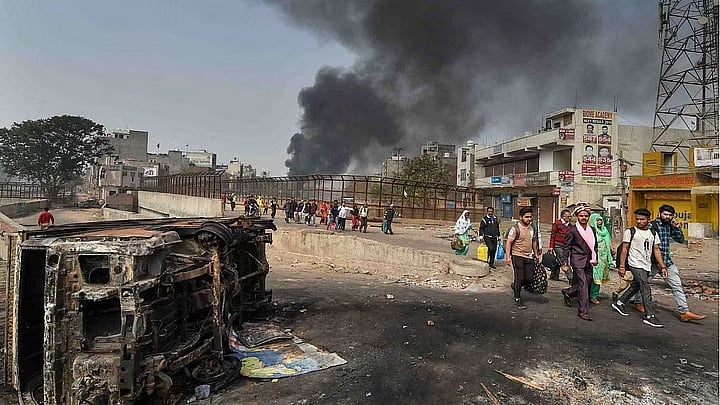
On 30 March 2026, a Delhi court acquitted nine individuals who had been charged in connection with a loot and arson case during the 2020 riots in northeast Delhi. The court found that the prosecution’s evidence, particularly the testimonies of key witnesses, was insufficient to establish guilt beyond reasonable doubt. The accused were arrested for alleged involvement in vandalism, arson, and looting in the Chand Bagh area.
As reported by undefined, Additional Sessions Judge Parveen Singh presided over the case against Shah Alam, Rashid Saifi, Mohammad Shadab, Habib, Irfan, Suhail, Salim alias Ashu, Irshad, and Azhar alias Sonu. The court noted that the testimonies presented were general in nature and lacked the specificity required for conviction.
The judge observed that the witnesses had provided statements that were inconsistent with the actual location and timing of the incidents. Analysis showed that the investigating officer recorded the wrong date of the incident, listing it as 24 February instead of 25 February 2020, which was highlighted by one of the witnesses who had approached the Deputy Commissioner of Police to correct the record.
In the case of the vandalised Innova Crysta vehicle, the court found that the accounts of the driver and passenger contradicted the police’s site plan and the testimonies of police witnesses. The judge stated,
"The testimonies of Constable Gyan Singh and Head Constable Sunil with regard to this incident are completely found to be false," further noting that the incident occurred at a location different from what was claimed by the police.
The court concluded that since the primary witnesses had deposed falsely regarding the timing and location of major incidents, it would be unsafe to rely on their testimonies for conviction. The judge stated that the accused were entitled to the benefit of doubt as the evidence was unreliable.
The accused were facing charges related to the vandalisation of a car, burning of a motorcycle, looting of street vendors’ carts, and arson at a shop named ‘Royal Motors’. The court ordered the discharge of their sureties and the cancellation of their bail bonds following the acquittal.
Coverage revealed that the court’s decision was based solely on the lack of credible and specific evidence, with the judge emphasising that it would be unsafe to convict the accused in the absence of reliable testimonies in this matter.
Note: This article is produced using AI-assisted tools and is based on publicly available information. It has been reviewed by The Quint's editorial team before publishing.