Dense Smog Engulfs Delhi as AQI Remains ‘Severe,’ Reaching 455
GRAP Stage IV has been implemented in Delhi, triggering strict anti-pollution curbs.
advertisement
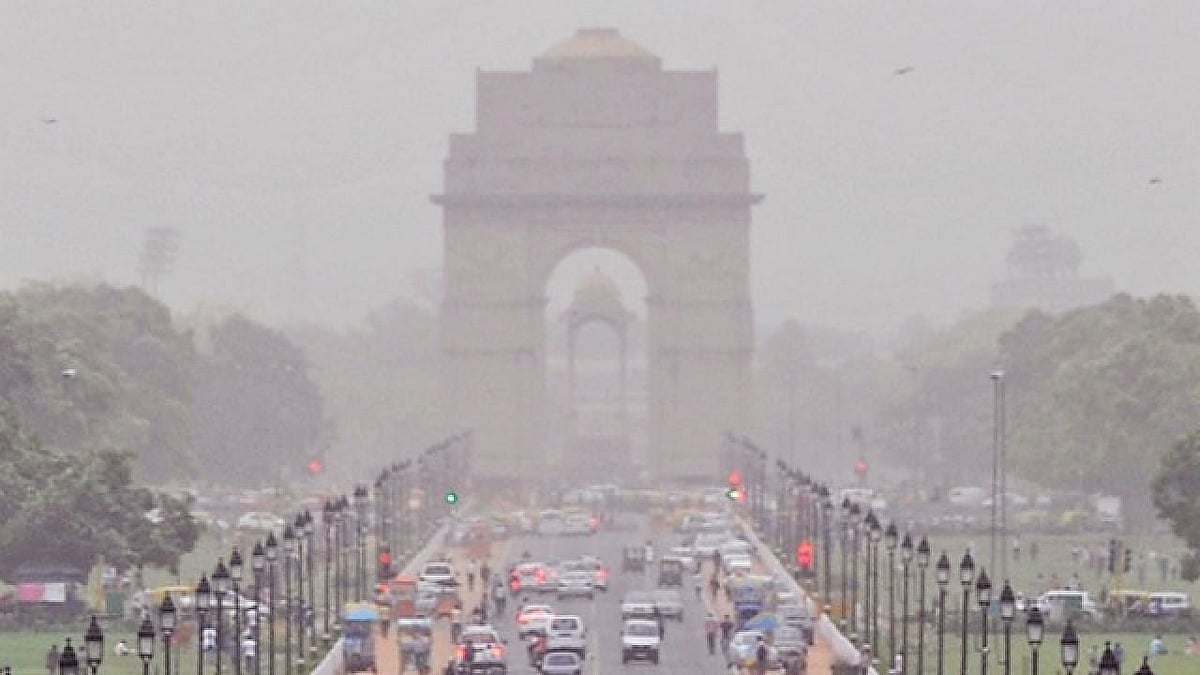
Delhi experienced a thick blanket of smog on 19 January 2026, with the Air Quality Index (AQI) recorded at 455, categorised as ‘severe’ by the Central Pollution Control Board.
Visibility was significantly reduced in several areas, including near Akshardham temple and Dhaula Kuan.
The city’s air quality had deteriorated from the previous day, prompting authorities to implement the strictest anti-pollution measures under the Graded Response Action Plan Stage IV.
According to The Indian Express, visuals from key locations such as Pandav Nagar and the Delhi–Meerut Expressway showed dense smog and low visibility, affecting commuters and daily activities.
The cold wave further exacerbated the situation, with minimum temperatures dropping to 5.3 degrees Celsius, which is below the seasonal average.
As reported by The Indian Express, the AQI in Delhi rose sharply from 400 to 444 within a day, moving from the ‘Very Poor’ to the ‘Severe’ category. Neighbouring cities such as Noida and Gurgaon also recorded high AQI levels, with Noida reaching 430 and Gurgaon at 378.
The Commission for Air Quality Management invoked Stage IV restrictions, including hybrid modes for schools and offices, construction bans, and curbs on polluting vehicles.
Data indicated that transport emissions were the leading contributor to PM2.5 levels in Delhi at 10.6 percent, followed by the industrial sector at 7.7 percent. External sources such as Baghpat and Ghaziabad in Uttar Pradesh contributed 15.4 percent and 12.2 percent respectively.
Meteorological conditions, including dense fog and lack of pollutant dispersal, exacerbated the air quality crisis.
The India Meteorological Department forecasted that air quality might improve slightly, shifting to the ‘Very Poor’ category for the next few days, but fluctuations between ‘Very Poor’ and ‘Poor’ were expected.
Forecasts suggested that dense fog would persist, with temperatures hovering around 25 and 8 degrees Celsius for the maximum and minimum, respectively.
“Hybrid mode for schools and offices, restriction on construction work and ban on entry of polluting vehicles are among the curbs imposed under GRAP’s Stage IV.”
As highlighted by The Indian Express, the Delhi government has approved Rs 3,386 crore for the expansion of three metro corridors under Phase IV of the Delhi Metro Rail Transit System.
The expansion aims to ease congestion and reduce pollution by strengthening public transport, with the new corridors expected to be completed within four years.
Officials stated that the expanded metro network will serve a wide range of neighbourhoods and is projected to double daily ridership, which currently stands at around 40 lakh.
The government emphasised that efficient metro operations are expected to play a significant role in controlling pollution in the capital.
The Commission for Air Quality Management has also recommended further expansion of the metro network to approximately 900 km, similar to Beijing, to address vehicular pollution, which remains a key contributor to PM2.5 levels in Delhi as recent recommendations highlighted.
“The expansion of the Metro network… will help in easing congestion and reducing pollution, making Delhi more modern.”
Note: This article is produced using AI-assisted tools and is based on publicly available information. It has been reviewed by The Quint's editorial team before publishing.