Delhi’s AQI Slips Back to ‘Very Poor’ After Brief Respite
The IMD has forecast a deterioration in air quality from Sunday due to reduced wind speeds.
advertisement
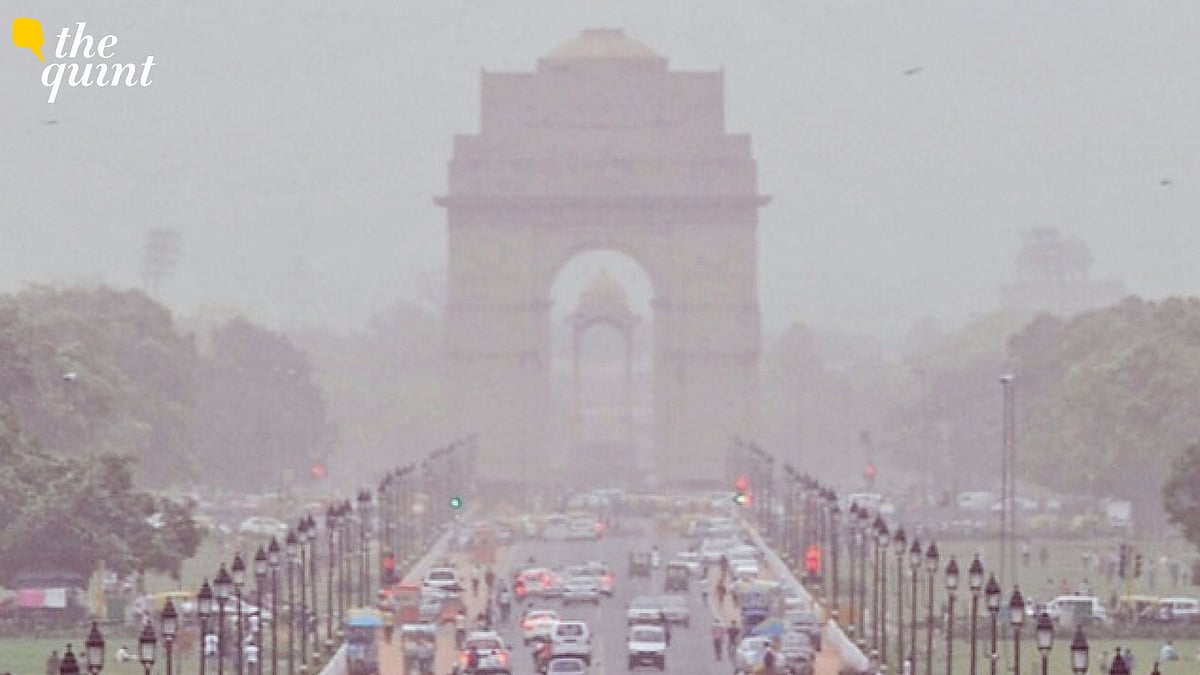
Delhi’s air quality index (AQI) returned to the ‘very poor’ category on Monday, 5 January, following a short period of improvement over the weekend.
The AQI was recorded at 307 on Sunday, after having improved to 276 on Saturday and 236 on Friday. Neighbouring cities Noida and Gurgaon also experienced a decline in air quality, with AQI levels of 307 and 333, respectively.
According to The Indian Express, the improvement in air quality over the previous two days was attributed to increased wind speed, which helped disperse pollutants. However, the India Meteorological Department (IMD) had forecasted a deterioration in air quality from Sunday onwards due to a reduction in wind speed.
This report noted, data from the Indian Institute of Tropical Meteorology’s Decision Support System indicated that transport emissions were the largest contributor to Delhi’s PM2.5 levels at 13.6 percent. The industrial sector contributed 11.4 percent, while residential emissions accounted for 3.3 percent. Waste burning, construction activity, and road dust together made up about 5 percent of the total PM2.5 load.
The highest external contribution to Delhi’s air pollution came from Jhajjar at 17.5 percent, followed by Sonipat at 7.7 percent, as this report noted.
The IMD reported that maximum and minimum temperatures in Delhi ranged between 16°C to 18°C and 7°C to 9°C, respectively.
“Air quality plunged in the ‘Very Poor’ category in neighbouring Noida and Gurgaon too as the AQI stood at 307 and 333 in the two cities, respectively, compared to 242 and 244 the day before.”
This article mentioned, the IMD forecasted that the sky would be partly cloudy over the next 24 hours, mainly clear for the subsequent four days, and partly cloudy thereafter. Shallow fog was predicted during the night of 4 January, with shallow to moderate fog expected in the mornings in the following days.
The brief improvement in air quality was short-lived this report highlighted. The return to ‘very poor’ AQI levels was consistent with meteorological predictions and emission data from local and external sources.
Note: This article is produced using AI-assisted tools and is based on publicly available information. It has been reviewed by The Quint's editorial team before publishing.