AQI Worsens, Smog Continues to Engulf Delhi as Cold Wave Grips North India
The AQI in Delhi was recorded at 438, categorised as 'severe', according to data from the CPCB.
advertisement
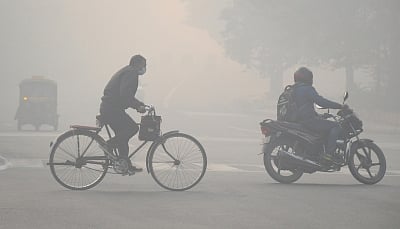
On 21 December 2025, Delhi experienced a severe cold wave accompanied by dense fog, resulting in a significant decline in air quality across the city. The overall Air Quality Index (AQI) was recorded at 438, categorised as 'severe', according to data from the Central Pollution Control Board (CPCB).
As reported by The Hindu, the toxic smog enveloping the city has raised serious health concerns among residents, particularly those with pre-existing respiratory conditions. The IMD has indicated that the cold wave is expected to persist, further aggravating the air quality issues.
The IMD recorded a minimum temperature of 8 degrees Celsius in Delhi, with maximum temperatures expected to hover between 16-18 degrees Celsius. The report noted that these conditions are contributing to the formation of dense fog, which is further trapping pollutants close to the ground.
According to the publication said, several areas in Delhi, including Anand Vihar and Akshardham, reported AQI levels above 400, indicating hazardous air quality. Residents have been advised to limit outdoor activities and take necessary precautions to protect their health.
The ongoing cold wave has also led to the invocation of the Graded Response Action Plan (GRAP) Stage-IV across Delhi-NCR, which includes measures such as a ban on non-essential construction activities and restrictions on certain diesel vehicles. The news report highlighted that these measures are aimed at curbing pollution sources and improving air quality.
Health experts have warned that prolonged exposure to such poor air quality can lead to serious health issues, including respiratory infections and cardiovascular problems. The publication further reported that vulnerable populations, including children and the elderly, are at a higher risk during these conditions.
“Residents are advised to stay indoors as much as possible and use air purifiers if available,” health officials recommended.
As the cold wave continues, the IMD has issued alerts for dense fog across Delhi and neighbouring states, warning residents to prepare for further disruptions. The account said that the combination of cold temperatures and fog is expected to persist, leading to ongoing air quality challenges.
Note: This article is produced using AI-assisted tools and is based on publicly available information. It has been reviewed by The Quint's editorial team before publishing.