Chile Wildfires Kill 18; Evacuations Underway Amid Heat and High Winds
Much of Chile remains under heat alerts, with temperatures expected to reach 38°C in the coming days.
advertisement
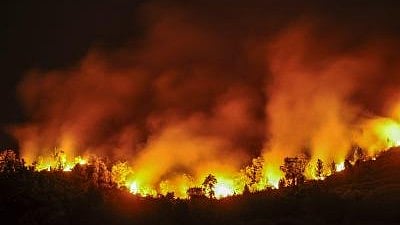
Wildfires in southern and central Chile have resulted in at least 18 deaths, the destruction of hundreds of homes, and the evacuation of approximately 20,000 people.
The fires, intensified by extreme heat and strong winds, have primarily affected the Ñuble and Biobío regions, located about 500 kilometres south of Santiago. President Gabriel Boric has declared a state of catastrophe, mobilising all available resources to combat the crisis.
According to BBC, the most dangerous fire swept through dry forests near the coastal city of Concepción, destroying around 250 homes. The Chilean forestry agency reported that firefighters were battling 24 active fires across the country, with the most severe in Ñuble and Biobío.
Much of Chile remains under heat alerts, with temperatures expected to reach 38°C in the coming days.
As reported by Deccan Herald, President Boric confirmed the death toll had reached 18 as of 19 January 2026. Nearly 8,500 hectares have been consumed by the fires, and authorities have issued evacuation orders for multiple communities.
The adverse conditions, including strong winds and high temperatures, have complicated firefighting efforts and increased the risk to residents.
As highlighted by Hindustan Times, the emergency designation allows for greater coordination with the military to manage the two dozen wildfires. Security Minister Luis Cordero stated that 50,000 people had been evacuated, and local officials described widespread destruction, with some communities reporting a lack of immediate federal assistance.
Residents recounted being caught off guard by the rapid spread of the fires, with some unable to evacuate in time.
"Many people didn’t evacuate. They stayed in their houses because they thought the fire would stop at the edge of the forest. It was completely out of control. No one expected it," said a resident of Penco, one of the hardest-hit cities.
As noted in an article by The Hindu, the government’s declaration of emergency in Ñuble and Biobío means the armed forces are now involved in firefighting and evacuation operations.
Most evacuations have occurred in the Biobío cities of Penco and Lirquen, which together have a population of around 60,000. Local television images showed flames and charred vehicles in the streets, underscoring the severity of the situation.
Reporting indicated that the fires have left a significant number of people homeless, with the total number of destroyed homes still being assessed. The fires have also caused fatalities in various locations, with charred bodies found in fields, homes, and vehicles.
The government has reiterated that all available resources are being deployed to support affected communities and contain the fires.
In addition, coverage revealed that both Chile and neighbouring Argentina have experienced extreme temperatures and heatwaves since the start of the year, contributing to the outbreak and spread of wildfires in the region.
The situation remains dynamic, with authorities continuing to monitor and respond to new fire outbreaks as weather conditions evolve.
"In light of the serious ongoing wildfires, I have decided to declare a state of catastrophe in the two regions. All resources are available," President Gabriel Boric stated on social media.
Efforts to control the fires are ongoing as details emerged about the scale of destruction and the challenges faced by emergency services.
The long-term drought in Chile has exacerbated the risk and intensity of wildfires in recent years, making recovery and prevention a continuing concern for authorities and residents alike.
Note: This article is produced using AI-assisted tools and is based on publicly available information. It has been reviewed by The Quint's editorial team before publishing.