CAQM Flags Major Deficiencies in Delhi’s GRAP Implementation
The CAQM’s review highlighted shortfalls ranging from 7 percent to 99.6 percent across mandated actions.
advertisement
The Commission for Air Quality Management (CAQM) has identified significant shortcomings in the enforcement of the Graded Response Action Plan (GRAP) measures in Delhi-NCR.
The review found that the Delhi Pollution Control Committee (DPCC) and other state pollution control boards failed to meet key targets for inspections, mechanical road sweeping, and complaint resolution.
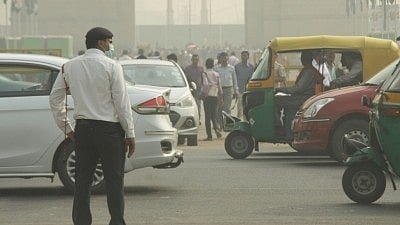
Air quality in Delhi remained in the ‘severe’ category, with the Air Quality Index (AQI) reaching 410 on 19 January 2026 and 440 the previous day.
According to The Indian Express, the CAQM’s review highlighted shortfalls ranging from 7 percent to 99.6 percent across mandated actions.
Inspections of large construction sites in Delhi showed an average shortfall of 87 percent during both Stage-III and Stage-IV of GRAP, while mechanical road sweeping fell short by around 70 percent.
The commission also noted a high pendency of public complaints, with 47 percent unresolved during Stage-III and 68 percent during Stage-IV.
Analysis showed that these lapses reflect weak enforcement and inadequate grievance redressal mechanisms.
The CAQM has directed the DPCC and other boards to identify responsible officers and initiate proceedings for failures in GRAP implementation. The commission termed the non-compliance as “serious” and emphasised the need for accountability in the enforcement process.
Mechanical road sweeping, a key measure to reduce dust and particulate matter, was found to be insufficiently deployed.
Following reports, the review also pointed to a backlog in addressing public complaints related to air pollution, which further undermines the effectiveness of the GRAP measures.
The CAQM’s findings indicate that the intended impact of the action plan is being compromised by these operational gaps.
“The commission said such lapses reflect weak enforcement and grievance redressal mechanisms,” the CAQM stated in its review.
Delhi’s air quality continues to be a concern, with the Indian Institute of Tropical Meteorology (IITM) forecasting that the ventilation index will remain below the favourable threshold of 6,000 m²/s in the coming days.
Coverage revealed that the air quality is expected to stay in the ‘very poor’ category until at least Thursday, with only minor improvements anticipated over the next week.
As reported by The Indian Express, Delhi has also fallen short of its National Clean Air Programme (NCAP) target for reducing PM10 levels. The city achieved only a 16 percent reduction against a 22 percent target, trailing behind neighbouring cities such as Noida, which recorded a 35 percent reduction. The data underscores the challenges Delhi faces in meeting national air quality standards despite significant funding and policy interventions.
Reporting indicated that while some cities in the National Capital Region (NCR) have exceeded their targets, Delhi’s progress remains limited. The disparities highlight the need for more effective implementation and monitoring of anti-pollution measures across the region.
“Delhi has managed only a 16 percent drop in PM10 levels against a target of 22 percent, leaving it trailing behind both its own benchmarks and nearby cities like Noida and Alwar,” the data submitted to the National Green Tribunal stated.
Efforts to address air pollution in Delhi have included increased inspections, mechanical sweeping, and public complaint mechanisms. However, as details emerged, the persistent gaps in enforcement and complaint resolution continue to hinder progress towards cleaner air in the capital.
Note: This article is produced using AI-assisted tools and is based on publicly available information. It has been reviewed by The Quint's editorial team before publishing.