China FM Wang Yi To Miss BRICS Meet in India, Iran's Araghchi Expected To Attend
BRICS Delhi meet faces diplomatic challenges amid West Asia conflict and key absences.
advertisement
The BRICS Foreign Ministers’ meeting is scheduled to take place in New Delhi on 14 and 15 May 2026. The gathering comes at a time of heightened tensions in West Asia and notable diplomatic absences, with India hosting representatives from Brazil, Russia, South Africa, Egypt, Ethiopia, Indonesia, and Iran. The meeting is expected to address regional conflicts and set the stage for the upcoming BRICS Summit in September.
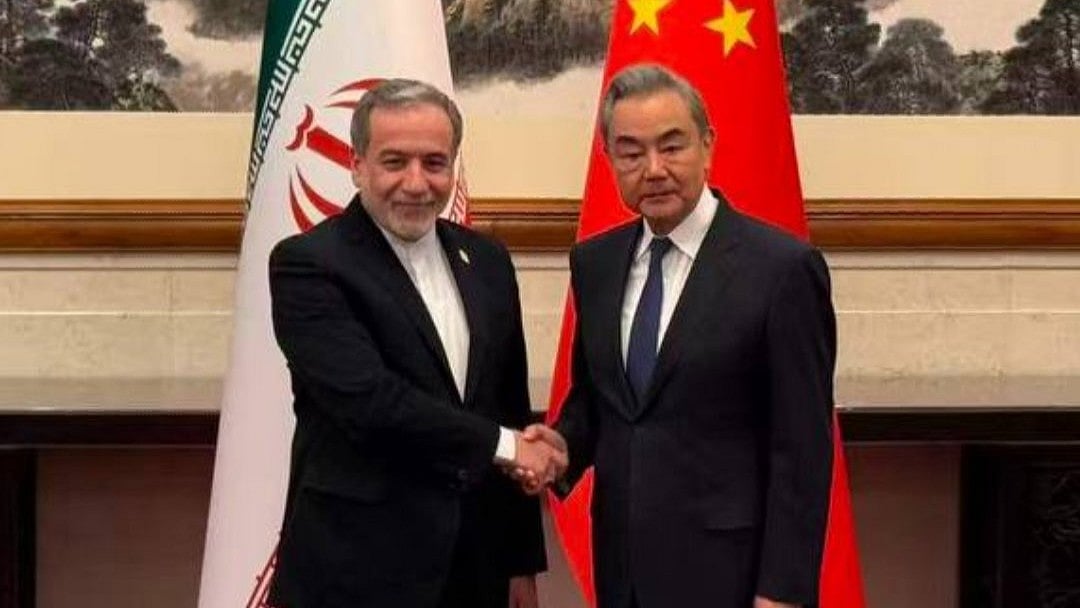
According to The Hindu, China’s Foreign Minister Wang Yi will not attend the BRICS Foreign Ministers’ meeting in Delhi due to “scheduling reasons.” Instead, the Chinese Ambassador to India, Xu Feihong, will represent China at the event. The absence coincides with the visit of United States President Donald Trump to Beijing, which has been cited as the primary reason for Wang Yi’s unavailability.
On the other hand, Iran's Abbas Aragachi is expected to attend the meet.
As highlighted by Hindustan Times, the ongoing conflict in West Asia, particularly between Iran and the United Arab Emirates, is expected to be a major challenge for the meeting. Recent attacks on energy infrastructure in the UAE and disagreements over the language used to describe the Palestine issue have complicated efforts to reach consensus among BRICS members. The Indian delegation has acknowledged the difficulty in producing a joint statement due to these sharp differences.
As The Indian Express stated in an article, India’s approach to BRICS and its broader foreign policy reflects a commitment to strategic autonomy. While India has resisted external pressures from major powers on issues such as the Ukraine conflict and oil imports, it has also sought to maintain balanced relations within the BRICS framework. The article notes, “India has shown a willingness to defy bigger powers, though its record is not perfect.”
The participation of Iranian Foreign Minister Abbas Araghchi is confirmed, with plans for bilateral meetings in New Delhi and a joint call-on with Prime Minister Narendra Modi alongside other BRICS ministers. Diplomatic sources indicated that Araghchi’s presence is significant given the recent escalation in the region and Iran’s central role in the ongoing disputes.
“A joint statement at the foreign ministers’ meeting is doable, but it will require some deft diplomacy,” a diplomat from a BRICS member state was quoted as saying.
Efforts to produce a consensus document have been hampered by disagreements over references to Palestine and the two-state solution. Coverage revealed that several BRICS members, including Brazil, China, and South Africa, have opposed any dilution of language supporting an independent Palestinian state with East Jerusalem as its capital, as established in previous summit statements.
India’s position on the West Asia conflict and its diplomatic balancing act have drawn attention. Analysis showed that India has reiterated its support for a two-state solution and condemned attacks on civilians and infrastructure, particularly after Indian nationals were injured in recent hostilities in the UAE.
At the same time, reporting indicated that India’s stance within BRICS is shaped by its broader strategy of “multi-alignment,” seeking to avoid alienating any major power while prioritising its own security and economic interests.
“The need of the hour is to build bridges. The deliberations at the meeting of Brics officials dealing with the MENA region have always fed into the meeting of the foreign ministers, which itself is crucial for preparations for the Brics Summit,” a diplomat said.
With the absence of China’s top diplomat and the presence of key figures from Iran and Russia, the Delhi meeting is set to test India’s diplomatic skills. Further updates are expected as the foreign ministers convene and attempt to navigate the complex geopolitical landscape.
Note: This article is produced using AI-assisted tools and is based on publicly available information. It has been reviewed by The Quint's editorial team before publishing.