Bombay: High Court Discharges Last Accused In 2006 Malegaon Blasts
Bombay High Court discharges last four accused in 2006 Malegaon blasts; victims express frustration.
advertisement
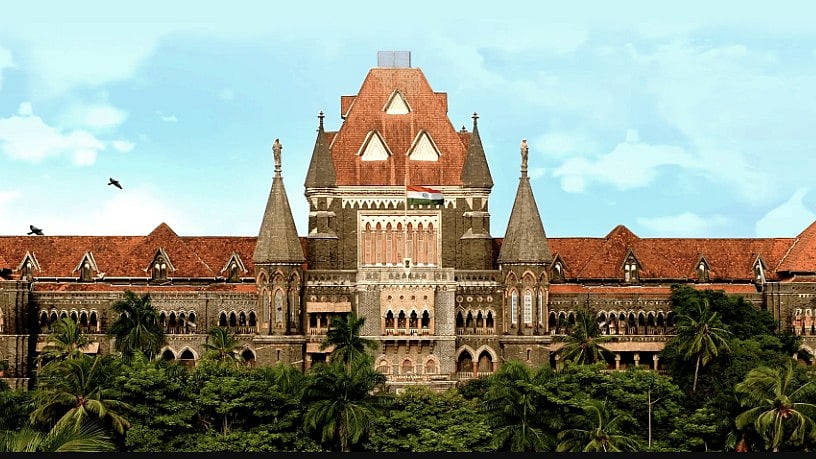
The Bombay High Court has discharged the last four remaining accused in the 2006 Malegaon blasts case, effectively leaving no one currently facing trial for the attack that killed 31 people and injured over 300. The decision comes nearly two decades after the blasts, following years of conflicting investigations and legal proceedings.
As reported by The Indian Express, the High Court quashed the charges against Manohar Narwaria, Rajendra Chaudhary, Dhan Singh, and Lokesh Sharma on 23 April 2026. The bench, led by Chief Justice Shree Chandrashekhar and Justice Shyam C Chandak, cited irreconcilable contradictions between the investigations conducted by the Maharashtra Anti-Terrorism Squad (ATS) and the National Investigation Agency (NIA).
The court observed that the NIA’s case relied primarily on circumstantial evidence and retracted statements, including those of previously discharged accused. Analysis showed that the NIA failed to collect fresh evidence after taking over the probe in 2011, instead depending on hearsay witnesses and statements that had already been discarded by other courts.
In its judgment, the bench noted, “A witness who gives two versions of a story and retracts his previous statement becomes an unreliable witness, and his testimony is liable to be discarded.” The court further stated that the special NIA court’s earlier order framing charges showed “no application of judicial mind.” Coverage revealed that the bench questioned how the trial court could ignore material collected by the ATS and CBI, such as voice samples and forensic reports, when these implicated a different set of accused.
“The case seems to have reached a dead end,” the High Court held, highlighting the inability to reconcile the two contradictory versions presented by the ATS and NIA.
As highlighted by The Indian Express, the decision has left victims’ families frustrated and without closure. Many relatives of those killed or injured in the blasts expressed disappointment, questioning how justice could be served if no one is held accountable after so many years.
For families like that of Shafique Ahmed Mohammed Salim, who lost his 18-year-old son Sajid in the attack, the ruling has deepened their sense of loss. Reporting indicated that Shafique, who was also injured in the blast, questioned, “If nobody caused the blasts, how did he and the 30 others die?”
Other victims’ families, such as Mohammed Arif, who lost his eight-year-old son, echoed similar sentiments. Statements from the ground reflected a pervasive sense of injustice and uncertainty about whether accountability will ever be established.
“Will justice ever be done? We have to accept what the court has said, but how and where do we seek justice now?” asked Arif, whose son was visiting Malegaon when he died in the blast.
The High Court’s ruling follows the discharge of nine other accused in 2016 and comes a year after the acquittal of seven people in the 2008 Malegaon blast case. Further details show that, as of now, neither the 2006 nor the 2008 Malegaon blast cases have resulted in any convictions.
Advocate Hamdani Irfana, representing victims through a legal aid NGO, stated that there is hope the government will appeal the latest order. Legal perspectives suggest that the case’s future depends on whether authorities choose to challenge the High Court’s decision in a higher forum.
“The ATS had immediately filed an appeal when the nine men were discharged in 2016. We hope that the government will appeal against this order too,” said Irfana.
Note: This article is produced using AI-assisted tools and is based on publicly available information. It has been reviewed by The Quint's editorial team before publishing.