Bangladesh’s First Woman Prime Minister Khaleda Zia Dies At 80
Zia entered politics after the assassination of her husband, former president Ziaur Rahman, in 1981.
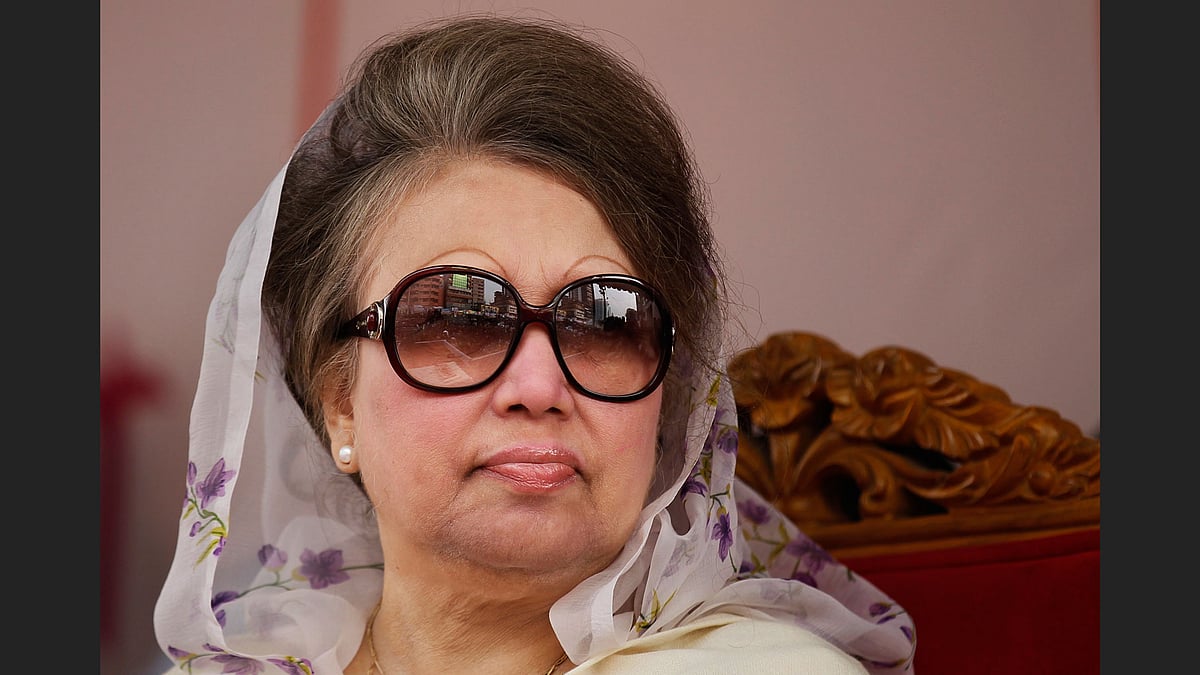
advertisement
Khaleda Zia, Bangladesh’s first female prime minister and a central figure in the country’s political history, died on 30 December 2025 at the age of 80. She passed away at Evercare Hospital in Dhaka after suffering from advanced cirrhosis of the liver, diabetes, arthritis, and heart and chest problems. Her death was announced by the Bangladesh Nationalist Party (BNP) early in the morning, just weeks before the scheduled national elections in February 2026.
According to Deutsche Welle, Khaleda Zia was praised for her role in restoring democracy in Bangladesh and for empowering women through educational and economic initiatives. She served as prime minister for three terms: 1991–1996 and 2001–2006, becoming the first woman to hold the office in Bangladesh. Zia entered politics after the assassination of her husband, former president Ziaur Rahman, in 1981.
As reported by The Indian Express, Zia’s son, Tarique Rahman, returned to Bangladesh on 25 December 2025 after 17 years in exile. He is expected to assume the BNP chairmanship full time following his mother’s death. Zia’s passing comes at a critical juncture, with the BNP preparing for the upcoming general elections and Rahman’s leadership taking on new significance.
As highlighted by BBC, Zia’s health had deteriorated significantly in her final days. Physicians described her condition as “extremely critical,” and she was placed on life support. The BNP announced her death on Facebook, stating, “Our favourite leader is no longer with us. She left us at 6am this morning.”
This report noted, Zia was acquitted of her last corruption case by the Supreme Court in January 2025, which had opened the possibility for her to contest the 2026 elections. However, her health prevented her from participating further in political activities. During her final days, interim leader Muhammad Yunus called her a “source of utmost inspiration for the nation.”
This article added, Zia’s political journey began after her husband’s assassination, when she rose from a private life to lead the BNP. She was instrumental in organizing mass rallies and campaigns for democracy during Bangladesh’s years of military rule. Her tenure saw the introduction of free and mandatory primary education and the reservation of parliamentary seats for women.
“People will remember her for introducing the parliamentary system of democracy in her country, for creating export-oriented readymade garment factories where hundreds of thousands of women got jobs, for introducing free primary education for all, and developing the caretaker government system for conducting free and fair national elections,” said Laila Noor Islam, professor at Dhaka University.
This report highlighted, Tarique Rahman filed his nomination papers for the February 2026 elections from the Dhaka-17 constituency. His return and candidacy have been met with significant attention, as he is expected to lead the BNP in the post-Khaleda Zia era.
This news report said, Rahman’s return has energized BNP supporters, who accompanied him to the Election Commission’s office. He is contesting from two constituencies, Dhaka-17 and Bogra-6, as part of the party’s electoral strategy. The BNP is seen as a frontrunner in the upcoming elections, with Rahman’s leadership now central to its campaign.
This article mentioned, the political landscape in Bangladesh remains volatile, with new alliances forming and the BNP’s prospects closely watched. The student-led National Citizen Party (NCP) has allied with Jamaat-e-Islami, while the BNP’s return to prominence is expected to influence relations with India and other regional powers.
Note: This article is produced using AI-assisted tools and is based on publicly available information. It has been reviewed by The Quint's editorial team before publishing.