Assam BJP Video Showing CM Himanta Firing at Muslims Deleted From X
Assam BJP’s video depicting Himanta Biswa Sarma firing at Muslims sparks widespread condemnation.
advertisement
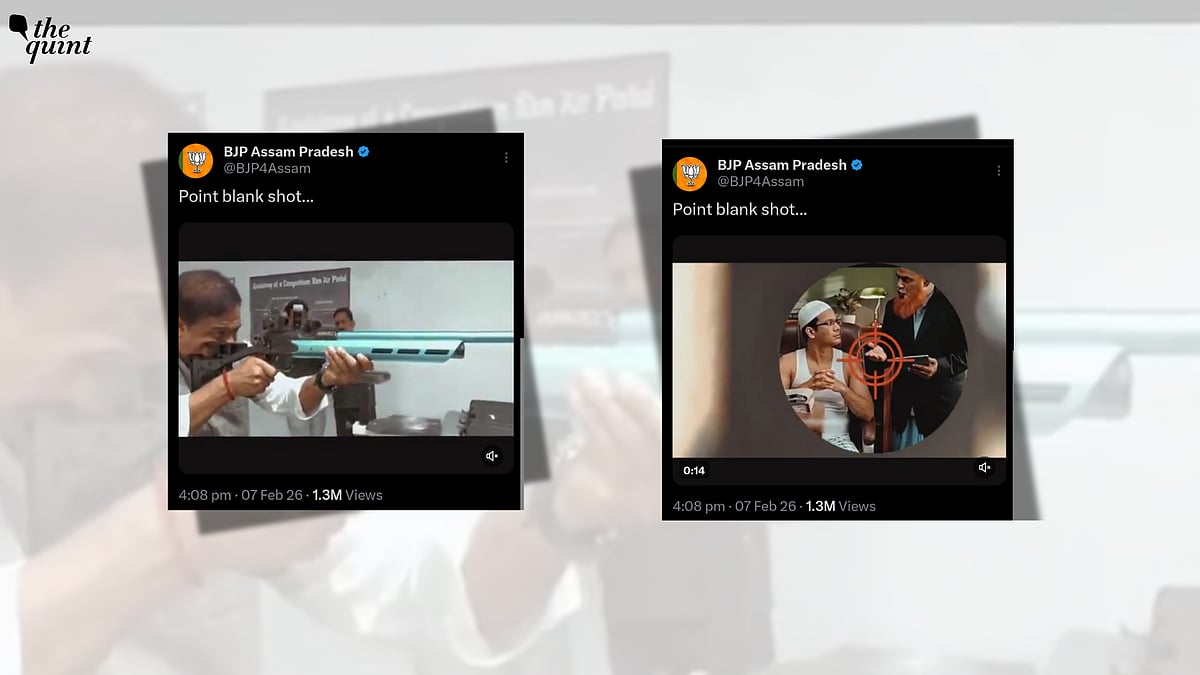
A video posted by the Assam BJP on its official social media account depicted Chief Minister Himanta Biswa Sarma symbolically firing at Muslims at point-blank range. The video included captions such as “point blank shoot,” “foreigner free Assam,” and “No mercy,” and was released amid heightened tensions over rhetoric targeting Bengali-origin Muslims in the state. The footage quickly drew widespread condemnation from political leaders, activists, and members of the public.
According to Maktoob Media, the video combined original footage of Himanta Biswa Sarma with AI-generated images of Muslims, intensifying criticism of the Chief Minister’s recent statements and actions. The video’s text included phrases such as “Why did you not go to Pakistan?” and “There is no forgiveness to Bangladeshis,” which many observers described as inflammatory and communal.
Condemnation of the video was swift, with opposition politicians and journalists calling for accountability. Coverage revealed that Trinamool Congress MP Sagarika Ghose demanded immediate action against those responsible for the video, while journalist Rana Ayyub highlighted the gravity of sharing such content from an official party account.
At a recent public event, Himanta Biswa Sarma made remarks about “making the Miya people suffer” and suggested that rickshaw fares should be underpaid if the driver is a Miya Muslim. Reporting indicated that these comments, along with the video, have been cited in police complaints and legal petitions alleging hate speech and violation of constitutional rights.
“The Chief Minister of Assam is of the BJP. Can any Chief Minister say something like this: ‘If there’s a ‘Miya’ driver in the auto-rickshaw, and the bill is five rupees, then you give him four rupees’? In Assam, ‘Miya’ refers to Muslims who were brought there by the British 150–200 years ago to cultivate land and work. They are citizens of India. They speak Bengali. How small are you, the Chief Minister of Assam?” said Asaduddin Owaisi, MP.
As reported by Hindustan Times, Himanta Biswa Sarma stated that not all Miya-Muslims are “unknown” people, clarifying that those who arrived before 1951 are considered indigenous. He denied any communal or religious intent behind his remarks, asserting that his statements were within the ambit of law and related to the implementation of the Assam Accord.
Political tensions escalated as AIMIM chief Asaduddin Owaisi publicly criticised the Chief Minister’s rhetoric. Analysis showed that Owaisi responded with a pointed jibe, offering “₹2 ki bheekh” to Sarma in protest against the rickshaw fare comment, and accused the Chief Minister of discrimination against the Miya Muslim community.
Legal and civil society responses have intensified, with rights activist Harsh Mander filing a police complaint alleging hate speech, and Jamiat Ulama-i-Hind approaching the Supreme Court to challenge the Chief Minister’s statements. The video and related remarks have become focal points in the ongoing debate over the treatment of Bengali-origin Muslims in Assam, who remain among the most socio-economically marginalised groups in the state as details emerged.
“Fear and prejudice cannot run a government. The Constitution guarantees equality to every citizen, regardless of their religion or community, and no authority, including a chief minister, can act otherwise,” Owaisi stated at a public rally.
In the context of the upcoming Assembly elections, the controversy over the video and the Chief Minister’s statements has further polarised political discourse in Assam. Further coverage noted that Sarma has defended his remarks as part of a campaign against illegal immigration, while critics argue that such rhetoric endangers minority rights and social harmony.
Note: This article is produced using AI-assisted tools and is based on publicly available information. It has been reviewed by The Quint's editorial team before publishing.