Encroachments, Mining and Urban Growth Threaten Aravalli's Ecology, Finds Study
Forest and agricultural land have decreased, built-up areas have expanded, and water bodies have diminished.
advertisement
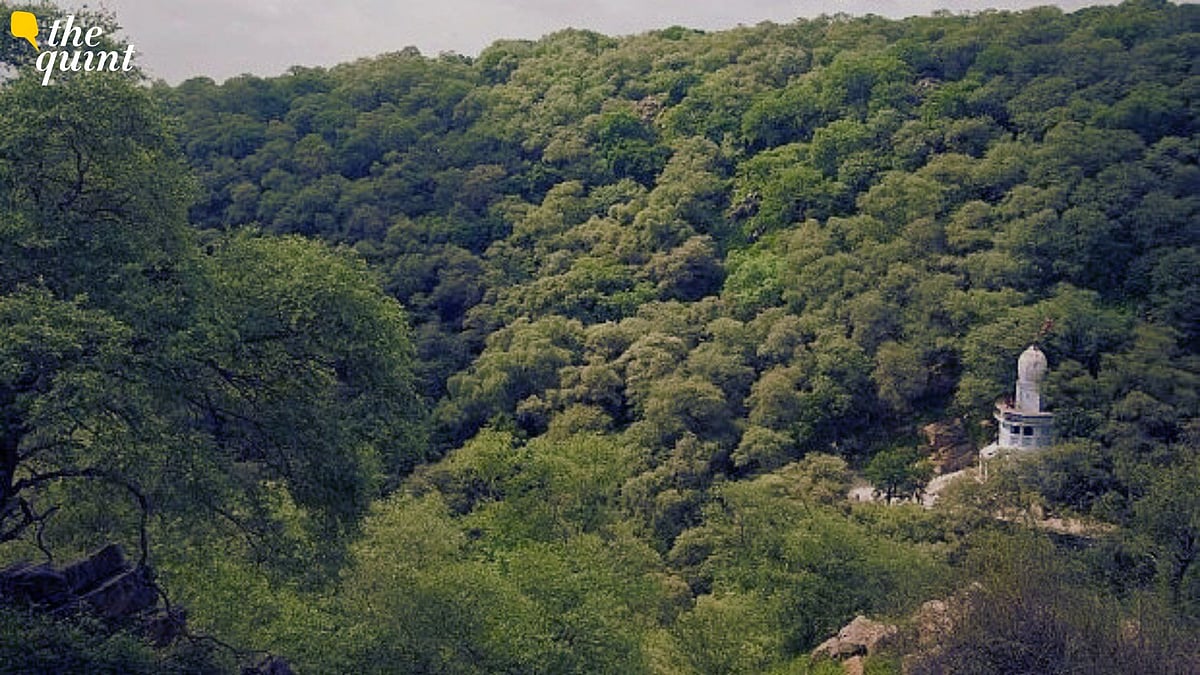
The Aravalli region in southern Haryana, particularly in Gurgaon, has experienced significant environmental changes over the past decade.
Forest and agricultural land have decreased, built-up areas have expanded, and water bodies have diminished.
These changes have led to habitat fragmentation, affecting local biodiversity and increasing environmental stress in the area.
According to The Indian Express, a recent pilot study conducted in four villages—Gairatpur Bas, Naurangpur, Sakatpur, and Sikohpur—revealed a loss of 429 hectares of agricultural land and 114 hectares of forest area over the last ten years.
The study, part of an eco-restoration plan by the Sankala Foundation and supported by the Embassy of Denmark, also documented a 20 percent reduction in water bodies, with seven out of 41 ponds disappearing between 2014 and 2024.
As highlighted by The Hindu, Rahul Gandhi addressed the urgent need to balance development with environmental protection in the Aravalli hills, stating, “If we destroy our environment, we cannot have development.
So, we have to be sensitive to our environment, to these beautiful hills and its ecology, if we want to develop.”
Midway through the decade, legal perspectives have also emphasised the importance of preserving natural resources for future generations.
The Andhra Pradesh High Court, while upholding a National Green Tribunal verdict, stated that both the state and its citizens have a duty to safeguard forests and ensure that environmental laws are strictly enforced to prevent unchecked industrial activity and environmental degradation.
“Barren land shows a modest increase of 22 hectares, whereas built-up area has expanded significantly by 323 hectares, reflecting rapid urbanisation in peri-urban Gurugram,” the study stated.
In the context of mining, analysis showed that environmental clearances must be granted only after thorough assessment of ecological impacts, including district-level surveys and evaluation of damage to fragile ecosystems. The court highlighted that sustainable development requires a balance between economic growth and environmental protection, and that mining guidelines apply to all forms of sand extraction, not just river sand.
Efforts to restore the Aravalli landscape are underway, with the Centre focusing on the Aravalli Green Wall project, which aims to restore degraded areas across 29 districts from Gujarat to Haryana and Delhi. Coverage revealed that local eco-restoration plans include afforestation with native species, removal of invasive plants, soil and moisture conservation, wildlife corridor management, and biodiversity monitoring over a seven-year period.
Heat stress and water scarcity have also intensified in the region. The study recorded peak surface temperatures between 48 to 56 degrees Celsius, reinforcing the need for vegetation buffers and soil moisture retention. Findings indicated that encroachments and construction on natural drainage have altered runoff patterns, reduced groundwater availability, and increased water scarcity.
“The rapid urbanisation was also showing an impact on heat stress. The areas recorded peak surface temperatures between 48 to 56 degree Celsius, which, the report said reinforced the need for vegetation buffers, soil moisture retention, and canopy enhancement.”
Ecological surveys documented 61 floral species in the project area, with 77 percent being native and 20 percent classified as invasive-alien. Shrubs dominated the vegetation profile, followed by herbs and trees, reflecting ongoing forest degradation and altered ecosystem structure. Reporting indicated that the presence of nearly 40 bird species and leopards using wildlife corridors underscores the biodiversity at risk due to habitat fragmentation.
At the end of the assessment period, as details emerged, the study concluded that sustained pressure from urbanisation and mining continues to threaten the ecological integrity of the Aravalli belt, necessitating urgent and coordinated restoration efforts.
Note: This article is produced using AI-assisted tools and is based on publicly available information. It has been reviewed by The Quint's editorial team before publishing.