Anti-CEC Protest: Patiala House Court Grants Bail To 17 Journalists And Students
Patiala House Court grants bail to 17 journalists and students arrested during protests in Delhi.
advertisement
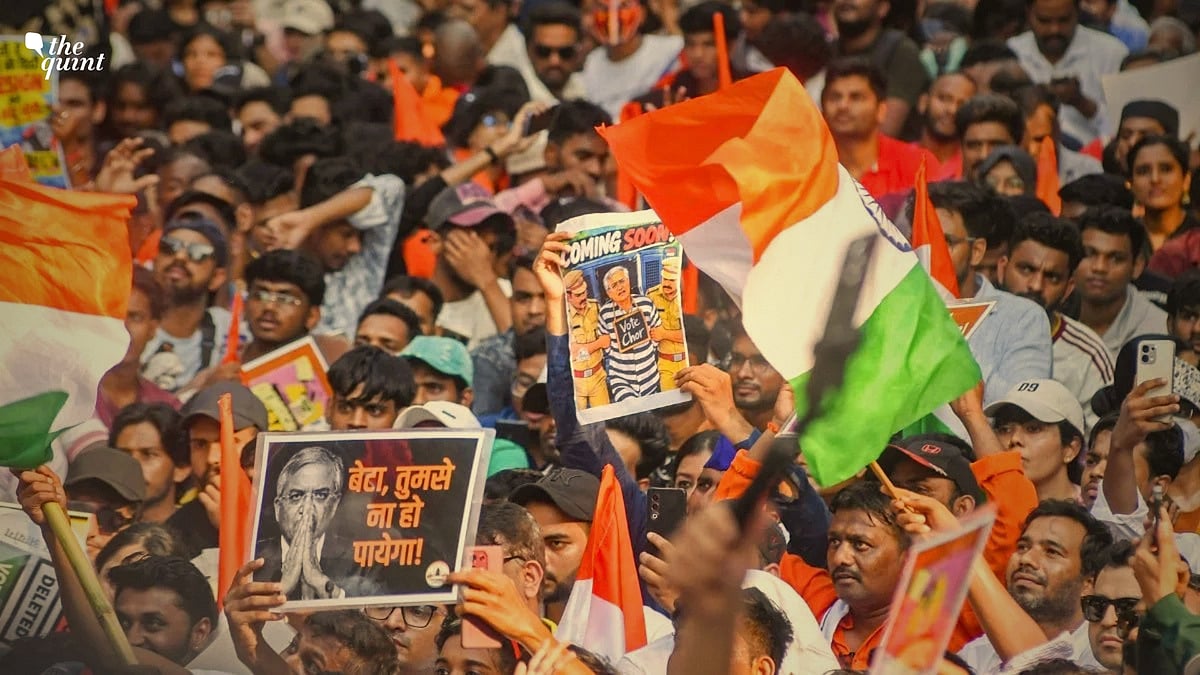
On 5 October 2026, the Patiala House Court in Delhi granted bail to 17 individuals, including journalists and students, who had been arrested during protests against Chief Election Commissioner Gyanesh Kumar. The court observed that the accused were young and did not appear to be habitual offenders. Bail was granted on the condition of furnishing a bond of ₹15,000 and a surety of the same amount for each accused.
According to Live Law, Duty Judicial Magistrate Animesh Kumar passed four separate orders late in the evening, noting that while the allegations were serious, most offences were bailable. The court stated, “They have their entire career lying ahead. Therefore, considering the facts and circumstances of the case, the accused persons are admitted to bail.”
Coverage revealed that the arrests were made under allegations of unlawful assembly and violation of prohibitory orders under Section 163 of the Bharatiya Nagarik Suraksha Sanhita. The police alleged that the protesters manhandled personnel, injured a woman constable, and damaged a bus during detention.
The court also addressed allegations of custodial torture raised by two accused. Reporting indicated that the court directed the Deputy Commissioner of Police, New Delhi, to submit a report on these allegations and ordered preservation of relevant CCTV footage from Parliament Street police station. Medical reports documented abrasions, tenderness, contusions, and swelling in some of the accused.
“It should be noted that allegations against the accused are serious in nature. One police official has allegedly sustained injuries as per the medico-legal case produced by the IO,” the court order stated.
As highlighted by The Hindu, among those arrested was a woman journalist who had accused Assistant Commissioner of Police Vivek Bhagat of sexual harassment during the protest. The FIR against the 17 included charges under the Bharatiya Nyaya Sanhita and the Prevention of Damage to Public Property Act. The court noted that, except for offences under Sections 132 and 190 of the BNS, all other charges were bailable.
Analysis showed that the protests were linked to demands for an FIR against ACP Bhagat and broader concerns about the functioning of the Election Commission, particularly regarding the Special Intensive Revision of electoral rolls. The court imposed conditions on the accused, including not leaving the country, not tampering with evidence, and appearing before the court as required.
Further details emerged that the two women journalists were released from Mandir Marg police station on the evening of 5 October, while the remaining 15 protesters were released later. The court’s order also referenced the ongoing inquiry into the sexual harassment allegations against ACP Bhagat, with the Delhi government confirming that the officer’s temporary promotion was suspended pending investigation.
“While peaceful protest is an individual’s right, assaulting police officials on duty is a ‘serious concern’ that cannot be permitted ‘under the garb of peaceful protest’,” the court observed.
In addition, further reporting noted that the accused were directed not to make any direct or indirect inducement or threat to any person acquainted with the facts of the case and not to commit any offence while on bail. The court also clarified that no claim of juvenility was made by the accused, based on their medico-legal certificates.
Additional context was provided regarding the broader protests, which included allegations of mistreatment of women journalists and students by police personnel. The Crime Branch is conducting an inquiry into multiple complaints of sexual harassment and manhandling during the demonstrations.
Note: This article is produced using AI-assisted tools and is based on publicly available information. It has been reviewed by The Quint's editorial team before publishing.