India’s Silver Future: How the Country Can Prepare for an Ageing Population
India must draw strategically on global experience in managing demographic transitions.
advertisement
This article has been authored by a member of The Quint. Our membership programme allows those who are not full-time journalists or our regular contributors to get published on The Quint under our exclusive 'Member's Opinion' section, along with many other benefits. Our membership is open and available to any reader of The Quint. Become a member today and send us your articles at TQmembersonly@thequint.com.
India has spent much of the last few decades celebrating its demographic dividend. But another demographic revolution is already underway, one that will redefine the country's next chapter.
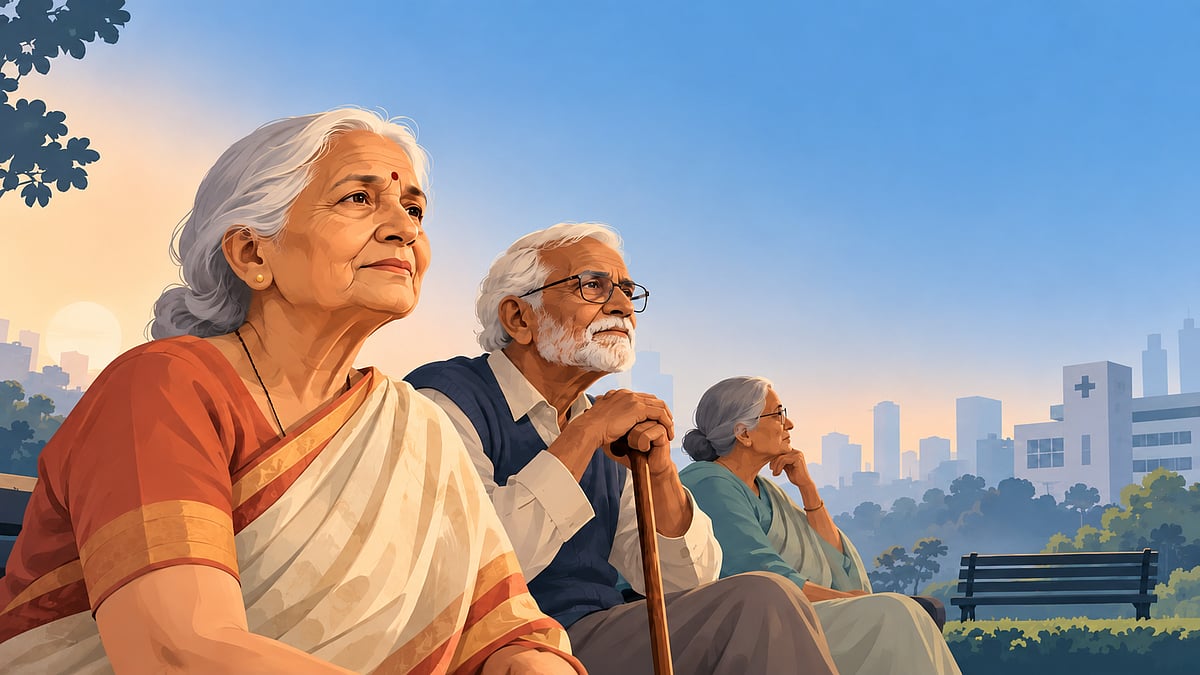
India is ageing, and it is ageing rapidly. Over the past decade, the number of seniors aged 60 and above has tripled, outpacing overall population growth.
The question is no longer whether India will age, but whether it will be prepared to age with dignity, security, and opportunity.
The Human Dimension of Ageing
Robust social security, accessible healthcare, and expanded elder care infrastructure are now macroeconomic and moral imperatives. India must also draw strategically on global experience in managing demographic transitions.
The Longitudinal Ageing Study in India (LASI), a comprehensive survey involving over 72,000 seniors, offers critical insights. Notably, 58 percent of older Indians are women, many widowed and enduring prolonged social and economic hardships. These adversities disproportionately affect mental health and cognitive function, especially compared to men in similar situations.
Contrarily, LASI data highlights a protective factor: a positive attitude toward ageing. Across income groups, seniors with an optimistic outlook show sharper cognitive function, lower dementia risk, and greater resilience in managing chronic health conditions. This finding, in line with research from high-income countries, underscores the importance of psychosocial well-being alongside biomedical interventions.
Policy Responses: Promising, Yet Insufficient
Experiences of ageing in India vary, shaped by family structures, gender norms, regional infrastructure, and economic status. The government has launched several initiatives:
Ayushman Bharat Scheme provides free annual health check-ups to over 60 million seniors aged 70 and above;
National Programme for Health Care of the Elderly (NPHCE) establishes geriatric wards and physiotherapy centres across districts;
Indira Gandhi National Old Age Pension Scheme disburses monthly pensions to over 22 million elderly below the poverty line;
Rashtriya Vayoshri Yojana supplies assistive devices to seniors with disabilities; and
Atal Vayo Abhyuday Yojana (AVYAY) supports nearly 700 old-age homes nationwide
These are commendable steps, yet the implementation gap remains stark. Only about 20 percent of eligible seniors access available health programmes. Public hospitals, especially in rural and semi-urban areas, face severe shortages of geriatric specialists, infrastructure, and funding. States like Kerala, Tamil Nadu, and Himachal Pradesh have disproportionately high elderly populations, resulting in uneven geographic distribution of elder care support.
From Demographic Burden to National Asset
Kerala illustrates where this is heading fastest. As India's fastest-ageing state, with 16.5 percent of its population already over 60, it has become a testing ground for elder care as a business.
Real estate developers and healthcare groups are building senior living campuses there at pace, backed by over Rs 13,000 crore in investment committed to India's senior living sector since 2025.
Much of the demand comes from Kerala's large non-resident population: over 40 lakh Keralites live and work abroad, and are willing to pay for professional care for parents left behind.
India stands at a demographic inflexion point. Current policy, while directionally sound, remains fragmented, underfunded, and insufficiently integrated. A reactive approach, responding to elder care crises as they emerge, will be fiscally unsustainable and socially unjust. India urgently needs a National Ageing Policy 2.0: a comprehensive, inter-ministerial framework that integrates health economics, labour policy, urban planning, and social protection into a coherent long-term strategy.
This framework must address three non-negotiable imperatives.
First, universal and equitable access, bridging the rural-urban divide in health infrastructure and ensuring that social protection reaches the most vulnerable, particularly widowed women and the rural poor.
Second, investment in human capital, training a large-scale geriatric workforce of doctors, nurses, community health workers, and social care professionals capable of meeting the rising tide of demand.
Third, harnessing the silver economy, as Kerala's own experience is already showing, by creating the regulatory conditions that allow private investment in elder care, assistive technology, and age-friendly housing to take root in other ageing states too, turning demographic pressure into economic opportunity rather than leaving it to a handful of pioneers.
The millions stepping into old age are not just recipients of welfare. They are individuals who have built our families and communities.
If India can harness its demographic dividend, it can also convert its ageing population into a “silver dividend”, fostering healthier lives, sustained participation, shared knowledge, and a thriving care economy. A developed India will be defined not only by rapid economic growth but also by the dignity it provides to its older citizens.
(Ramya K is a postgraduate student pursuing an MSc in Psychology (Health and Wellbeing) at CHRIST (Deemed to be University), Bengaluru. She holds a Post Graduate Diploma in Social Sciences Research from the same university. Dr. Viji B is an Assistant Professor in the Department of Economics at CHRIST (Deemed to be University), Bengaluru, with 12 years of teaching and research experience. This is an opinion piece, and the views expressed above are the author’s own. The Quint neither endorses nor is responsible for the same.)