These Firang Couples Know a Far Different India Than You and I
There is more to this country than just the ‘Incredible India’ tag – find out these feisty foreign travellers.
advertisement
When Londoners David and Katherine read the book Shantaram, they knew they had to visit India to see what Gregory Roberts had written so vividly about.
But once here, the duo – like many other tourists who visit India – discovered that there was more to it than merely being ‘incredible’.
As one of their Instagram posts go (read above), it seems like they have a few suggestions for the Indians living in Modi’s ‘Swachh Bharat’.
An Incredible India Through Foreign Eyes
The couple, who quit their jobs to travel the world, has been in India since August and covered close to 20 cities and towns already. David has seen Machu Picchu, the Great Wall of China, the Great Barrier Reef and Christ the Redeemer – but Amritsar’s Golden Temple is right up there on his list.
“Some amazing locals got us kitted out in turbans and took us out for an impromptu photo-shoot around town. It turned out to be one of our most enjoyable days in India,” he says.
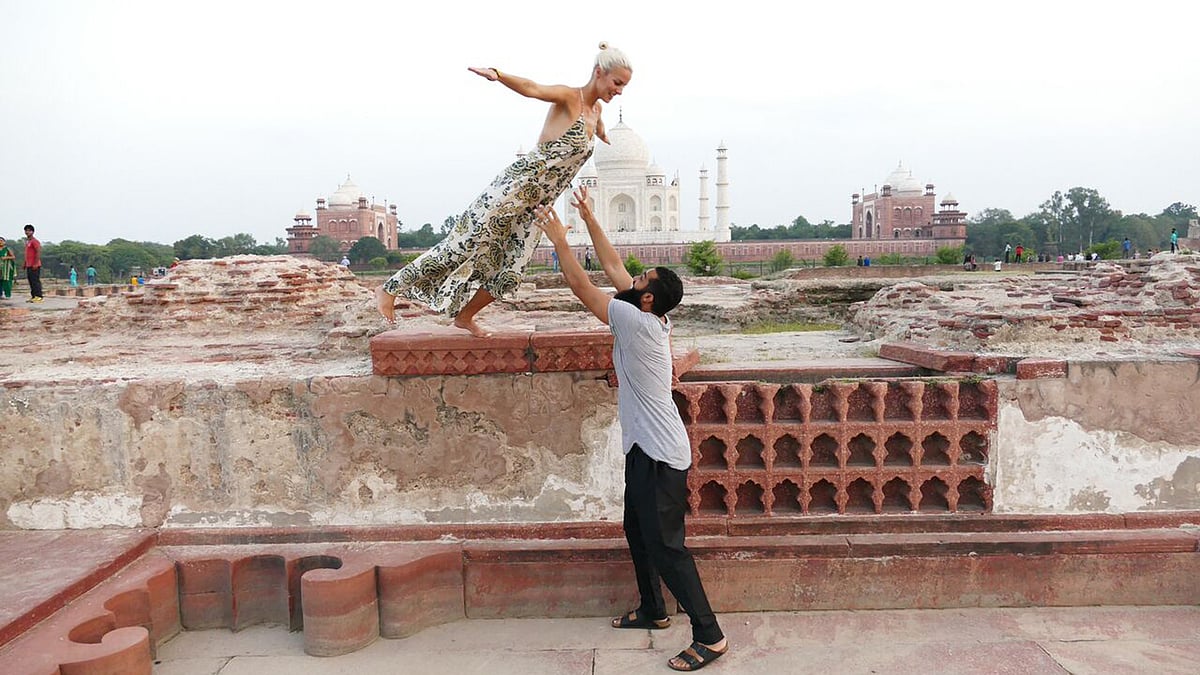
However, it was Srinagar that surprised them. Having heard a lot of negative things about it, they found it surreal to wake up on a houseboat and while away time on a shikara in Dal Lake.
For New York’s Adrienne and Andrew McDermott, coming to India was a no-brainer as it was one of the most mysterious and perplexing countries they’d heard of.
“In Delhi, we made incredible, lifelong friends who showed us the local lifestyle. Agra has the Taj and needs no explanation. We loved all of Rajasthan, especially the charming Udaipur. Mumbai, during the Ganesh festival, was nothing short of magical; Varanasi was beyond powerful, intense and gorgeous. As for Dharamshala, you can’t go wrong with a city in the mountains, riddled with monks and easygoing travellers; it was operating in slow motion compared to the other cities!” says the 26-year-old Adrienne who left a tech start up and started travelling with her husband Andrew.
“Indians Stalk Us”
On the flipside, the couples were wary of the attention they got; people interrupted them for selfies, stalked them in monument complexes and scammed them.
“Being clicked without consent was intimidating and concerning at times because you really don’t know what their intentions are,” explains Adrienne.
Swachh or Not
The couples agree that in India, most people struggle with a lack of cleanliness. “In between the air pollution from vehicles, human defecation and trash riddled streets, it’s definitely not a country for everyone,” Adrienne quips.
The tourist infrastructure can be a bit of a hit and miss, feels Katherine. Basic things like signs directing you to tourist attractions can be non-existent or navigating the train platforms can be tricky.
“India should be attracting more tourists than it does. The tourist board here should be doing more to promote it.”
Women Aren’t Safe
David expresses shock at the treatment of women by men in India.
To female travellers, Adrienne suggests covering up.
“Wear pants and tops that veil your shoulders and chest. It’s hot and humid, so you’ll desperately want to wear shorts and tank tops, but don’t. Also, don’t get too friendly with men. Most of them are harmless, but the few that I’ve encountered without Andrew by my side were kind at first, but quickly changed gears to forward, pushy and intimidating,” she explains.
Lieselot De Brauwer, a Belgian who visited India with her boyfriend Nico, agrees. “Its better not to travel solo or do something stupid in India; it’s a big country with all kinds of people. One should have a companion.”
That said, the firangi couples vouch for India.
(Runa Mukherjee Parikh has written on women, culture, social issues, education and animals, with The Times of India, India Today and IBN Live. When not hounding for stories, she can be found petting dogs, watching sitcoms or travelling. A big believer in ‘animals come before humans’, she is currently struggling to make sense of her Bengali-Gujarati lifestyle in Ahmedabad.)