
WHO Declares Public Health Emergency: What Does it Mean?
What to Expect From an International Public Health Emergency
advertisement
The Emergency Committee of UN health agency at the World Health Organisation reconvened in Geneva today to determine whether the coronavirus from China, called 2019-nCov, constitutes a public health concern.
The novel coronavirus outbreak that originated from Wuhan in China has triggered panic around the world, with cases being reported in Japan, South Korea, Thailand, Taiwan, Australia & the US. At least 17 people have lost their lives to the pneumonia-like virus.
WHO Director-General Tedros Adhanom Ghebreyesus, has said that the situation is ‘evolving and complex’.
What Qualifies as a Public Health Emergency
The WHO defines Public Health Emergency of International Concern (PHEIC) under the International Health Regulations (IHR) as “an extraordinary event which is determined to constitute a public health risk to other States through the international spread of disease and to potentially require a coordinated international response”. This definition suggests a situation that is:
- serious, sudden, unusual or unexpected;
- carries implications for public health beyond the affected State’s national border; and
- may require immediate international action.
The responsibility of determining whether an event is within this category lies with the WHO Director-General and requires the convening of a committee of experts – the IHR Emergency Committee. It is a rarely used designation.
The WHO had last declared the Ebola outbreak in the Democratic Republic of the Congo (DRC) a public-health emergency of international concern (PHEIC). This was the fifth time that the agency had declared a global emergency. The previous four include the H1 virus that caused an influenza pandemic (2009), West Africa's Ebola outbreak (2014-2016), polio (2014) and Zika virus (2016).
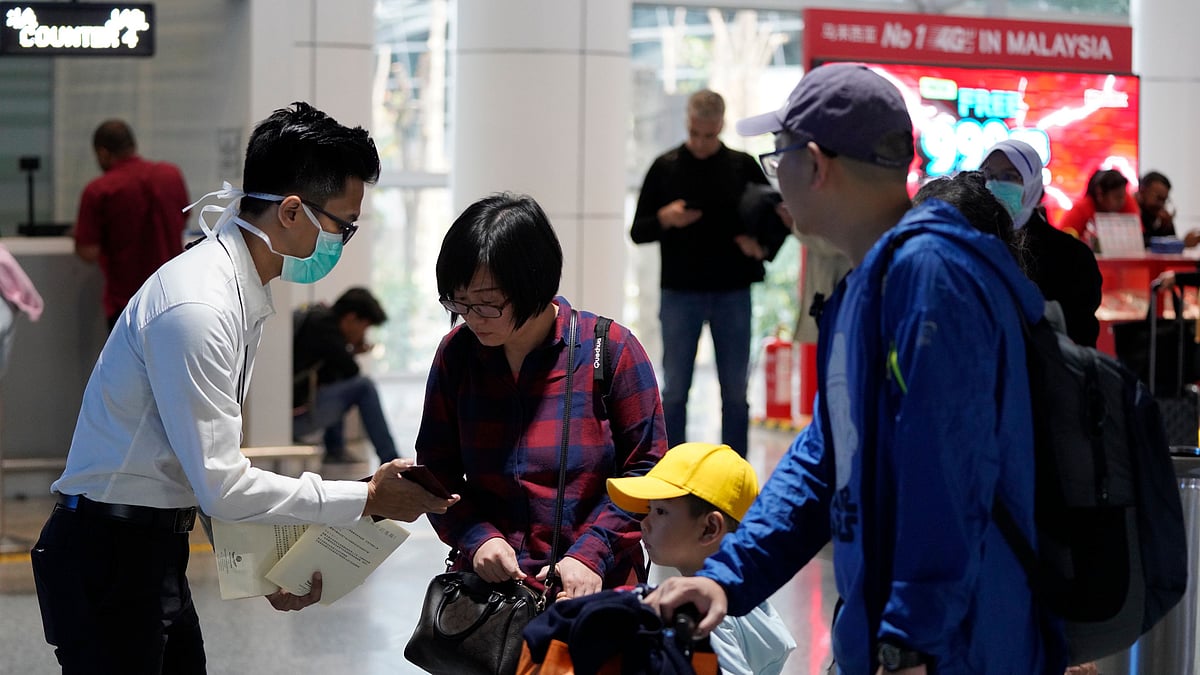
Declaring the coronavirus outbreak a public health emergency of international concern would lead to a boost in public health measures, funding and resources to prevent further spread. Restrictions and higher security for trade and travel. Airport screening of passengers has already begun in many of the affected and unaffected regions.
The Role of the Emergency Committee
This committee advises the Director General on the recommended measures to be promulgated on an emergency basis, known as temporary recommendations.
- Temporary recommendations include health measures to be implemented by the State Party experiencing the PHEIC, or by other States Parties, to prevent or reduce the international spread of disease and avoid unnecessary interference with international traffic.
- The Emergency Committee continues to provide advice to the Director-General throughout the duration of the PHEIC, including any necessary changes to the recommended measures and on the determination of PHEIC termination.
- WHO maintains an IHR roster of experts and the members of an IHR Emergency Committee are selected from this roster and/or WHO expert advisory panels and committees.
- At least one member of the Emergency Committee should be an expert nominated by a State Party within whose territory the event arises.
- Access to all paywalled content on site
- Ad-free experience across The Quint
- Early previews of our Special Projects
Published: 23 Jan 2020,04:06 PM IST