Exclusive: Rakeysh Omprakash Mehra’s #FavouriteFive Flicks!
Five incredible films that have inspired filmmaker Rakeysh Omprakash Mehra
advertisement
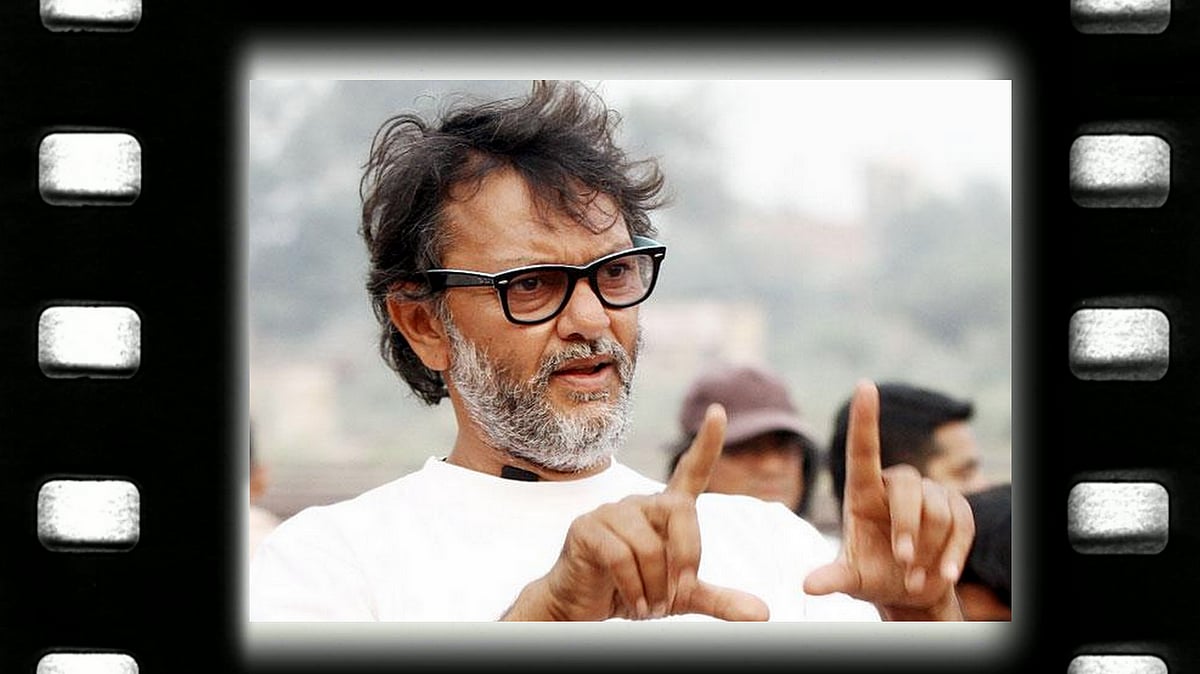
This week on #Favourite Five, we have Rakeysh Omprakash Mehra, the director of Rang De Basanti (2006) and Bhaag Milkha Bhaag (2013). He considers this, a very unfair to place to be in, and it is only after much persuasion that he opens up about five of his most favourite films ever!
Do Aankhen Barah Haath (1957)
Rakeysh Omprakash Mehra: While speaking in Pune once, the feeling I got was they own V. Shantaram, because he is Marathi. I told them that they are completely mistaken. Nobody can own Shantaram, he belongs to the world. A Russian, American or a German owns Shantaram as much as we do, every student of cinema owns him. I love Do Aankhen Barah Haath especially because it came at a time when India was being born. What the film is trying to say is that let bygones be bygones, and let’s make a new nation. So he was a man who actually took that philosophy and made that into a film. It’s the most difficult thing for a moviemaker, to convert a philosophy into a plot, and he did that beautifully. It was roughly based on a true story, into which he wove in some mass elements without taking away from the integrity of the story. No wonder it won the Silver Bear at the Berlin International Film Festival.
Ran (1985)
Rakeysh Omprakash Mehra: I am a huge Akira Kurosawa fan, and it would be very difficult to choose between Seven Samurai (1954) and Ran. Red Beard (1965) is another favourite. But Ran stands out for me. Ran is about how humans react to humans, and in this larger than life setting, it works as an amazing exposition of human psychology. I can’t stop talking about the small details that have gone into it. For me, it has always been an exploration of human psychology, thinking, relationships, and everything in between. It just shows us the mirror. And add to that the canvas it’s painted on, it is pure cinema. Just breathtaking!
Nights of Cabiria (1957)
Rakeysh Omprakash Mehra: It’s very difficult to choose from Federico Fellini’s body of work. I don’t know what to pick, between La Dolce Vita (1960) and 8 ½ (1963). I would perhaps go for Nights of Cabiria, because it is very, very close to my heart. We need love, and we all are actually searching for love, howsoever cruel our lives might be. You could be a prostitute, but that doesn’t take away your right to deserve love. And it’s that human endeavour, the right, the want to fill the emptiness with love, which everyone deserves. Fellini takes us to the edge, and all there is, is a black hole, but the amazing thing is life carries on. What I liked about it, is that in the end, even after going through so much, the protagonist still smiles. It doesn’t intimidate me, it reaches out to me. I like movies which can hold my hand. In my most honest moments, this movie does.
The English Patient (1996)
Rakeysh Omprakash Mehra: It’s impossible to define The English Patient, the film based on Michael Ondaatje’s great novel. It’s not a movie, it’s a fairytale set in reality. And filled with so much pain and love, so much love and love, so much love, in one film, in one story, and from different points of view, and so tragic. That, for me, is what a romantic tale would be, and The English Patient simply tops all expectations. This is an impossible film, it can only be conjured in a dream and then you can make it. It’s a painting like Vincent van Gogh’s Sunflowers. It’s a symphony like Beethoven’s Ninth, or it’s even like the iPhone, it happens once in a while. The colours of life so well captured, and it tells us that love is illogical. I have never tried to understand The English Patient, there is so much to feel there.
The Decalogue (1989)
Krzysztof Kieślowski’s The Decalogue is a compilation of ten films and it is ten hours long, but these ten films tell you everything about life. As a piece of work, it’s crazy. It was made during the Communist era and one can only wonder how Kieslowski pulled off an anti-communist film with communist funding. I have no reason to start complaining that I am not getting money, or nobody is acting in my film, those are baby problems we talk about. And here is a guy who pulled off a miracle. A great movie like this stops becoming a movie; it becomes a part of your life.
(The writer is a journalist and a screenwriter who believes in the insanity of words, in print or otherwise. Follow him on Twitter: @RanjibMazumder)