Scores of Muslims Were Almost Erased from Alwar Rolls. Why Is EC Avoiding Probe?
Administration's silence on Alwar voter roll tampering raises serious concerns.
advertisement
(Investigations into India's electoral institutions are a key part of The Quint's reportage. Help us do more such stories by becoming a member.)
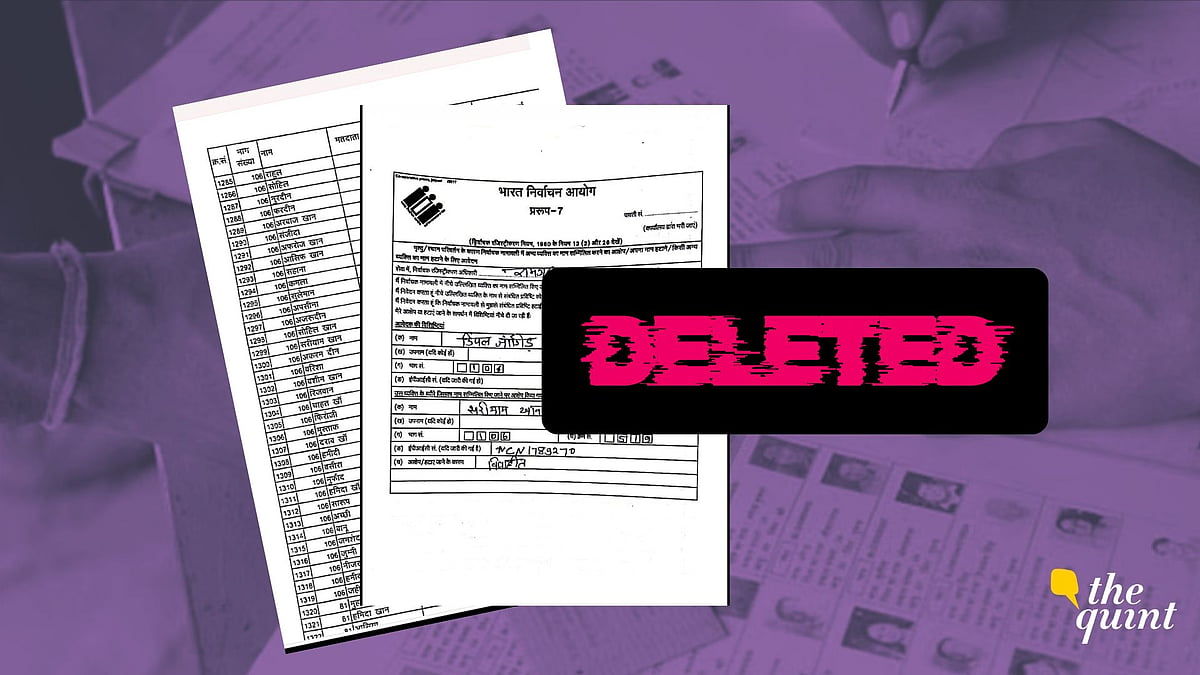
Nearly a month after thousands of Form-7 applications were filed to remove names of voters in Rajasthan's Alwar district, authorities have yet to launch a credible probe into how the forms originated, who filed them, and whether signatures were forged.
Form-7 is the statutory objection form that can be used to delete names from electoral rolls in India.
As per copies of forms, seen by The Quint, they were overwhelmingly filed under the names of Booth Level Agents (BLAs) working for the Bharatiya Janata Party (BJP) and predominantly targeted Muslim voters in Rural Alwar.
This reporter spoke to BLAs who were signed as objectors on these forms, Booth Level Officers (BLOs) working in the area, and several people in the administration familiar with developments related to the case to piece together how the conspiracy unfolded and why the administration is not keen on launching an investigation.
What Happened: Bulk Form-7s Filed for Deletion
In mid-January 2026, Congress workers in Alwar raised the alarm over a large number of Form-7 applications that had been submitted to the Returning Officer’s table seeking deletion of names from the voter list.
Allegations, cross verified by The Quint, included:
Hundreds of forms were filed in the names of people with Muslim-sounding names such as Sahun, Ramzan, Nawab and Naser.
The handwriting on many forms appeared similar and computer-generated, raising suspicion of fabrication.
Some bundles of forms were reportedly left on the ERO’s desk without any clear applicant contact details.
BLOs and BLAs Speak Out
This reporter spoke to 10 Booth-level agents (BLAs) and Booth-level Officers (BLOs) in Alwar who made startling claims about the submissions. Many of them indicating that their signatures were forged and names misused:
“Names of my own family members were listed for deletion,” said Nawab, BJP's BLA in the Bera Was village. "I have no idea who forged my signatures," he added.
Several BLOs corroborated similar experiences:
"Forms were delivered to us with names of applicants we have never met. Many of the alleged signatories reached out to us saying they had no idea their names were on these forms," a BLO said during an informal briefing.
Multiple BLOs also raised alarm that the forms contained either generic contact information or none at all, making it impossible to verify authenticity.
Yet the administration has not shared details of any inquiry or audit into the forms or the submissions. The BLAs told The Quint that they haven't been called for questioning either.
The Missing Investigation
Form-7 is meant to be used under strict conditions — objection to a voter’s inclusion or valid deletion due to death, migration, or duplicate registration. It’s not a tool for arbitrary removal. The process, governed by the Registration of Electors Rules and the Representation of the People Act, requires verification and inquiry by election officials before any name is actually removed.
Yet no FIR, no administrative inquiry, no forensic audit of handwriting or digital origin has been announced in Alwar.
Sources familiar with developments related to the case told The Quint that the overall attempt was to just brush the case aside by saying no names were deleted.
"Names weren't deleted because the conspiracy was caught beforehand in this case. But what if there are more such cases which didn't come to light? The focus should have been on finding who submitted these forms. But there has been no effort to do that so far," an election official in Alwar said on the condition of anonymity.
Another election official pointed out how there were several lapses from the end of the Election Returning Officer (ERO). "As per rules, if Form-7 is physically sent to the ERO, they must upload it online before sending it to the BLO. How is it possible that the ERO received so many forms and did not get suspicious of the process? Why were these forms sent to BLOs and not uploaded online?" the source said.
(Repeated calls to the concerned District Magistrate and Sub-Divisional Magistrate for an official comment on the status of the probe went unanswered. This story will be updated if and when we hear from them.)
Pattern Across States
Similar episodes have surfaced in other states during the Special Intensive Revision (SIR) process:
Across Uttar Pradesh, BLOs reported receiving envelopes of Form-7s naming Muslim voters for deletion but some applications had incorrect or no applicant details. Many signatories denied ever filing them.
In Meerut, villagers protested when 200 names were flagged wrongly as dead or migrated, with pre-filled forms. Officials said they couldn’t trace where the forms came from.
These patterns suggest that the problem is not isolated to one district or state, and may be symptomatic of broader lapses in verification during the SIR process.
How This Case Should Be Investigated
There are multiple ways in this investigation can be carried out. It is pertinent to note that a Special Investigating Team (SIT) in Karnataka is investigating a similar case of Form-7 misuse in Aland.
After speaking with multiple law enforcement officials, this reporter pieced together ways in which this case can also be investigated:
1. Forensic Examination of the Forms
A handwriting and digital forensic audit of the forms is essential. Analysts should trace:
Handwriting uniformity
Printed form origin (if computer-generated)
Metadata on any scanned/printed documents
The investigation should also seek to determine if pen drives, templates, or pre-filled batches were circulated.
2. Track the Chain of Custody
Officials should detail:
Who received the forms
When and how they were delivered to the ERO
Whether there are CCTV or sighting records from the office
Any logbooks or registers for receipt of submissions
This will help pinpoint the origin point.
3. Cross-Check with the Alleged Signatories
Every name listed as an applicant should be individually contacted and recorded under oath whether they:
Submitted the form
Recognise their signature
Authorise anyone else to submit on their behalf
False statements here could be evidence of forgery.
4. Examine Administrative Silence
The refusal or unavailability of key officials like the DM and SDM to address public concern must be probed:
Was this avoidance due to political pressure?
Were requests for action docketed and ignored?
Is there a record of internal communications regarding these forms?
Freedom of Information rules could be used to compel disclosure.
5. FIRs and Judicial Oversight
Given the potential criminality in forged signatures and mass disenfranchisement attempts, FIRs should be registered where evidence exists. If the administration fails to do so, petitioning the High Court for a judicial probe may be necessary.
- Access to all paywalled content on site
- Ad-free experience across The Quint
- Early previews of our Special Projects
Published: undefined