India’s Trust-Driven Social Platform Rises Across South Asia
ZKTOR is emerging as a strong Indian social platform, with Softa building a broader digital ecosystem.
advertisement
India may be witnessing the early formation of a new digital platform story through ZKTOR and the wider Softa Technologies ecosystem. Positioned beyond a privacy-first Indian social media app, ZKTOR is being developed as an all-in-one Indian social platform for an era shaped by artificial intelligence, deepfakes, cyber insecurity and growing discomfort with unsafe digital environments. Its architecture is built around privacy and data safety by design, Zero Knowledge Server Architecture, No URL Media Architecture, no behaviour tracking and default multi-layer encryption.
The proposition is resonating strongly with younger users across India and South Asia, especially Gen Z and young women, who are increasingly aware of the risks of open digital exposure. ZKTOR’s appeal is not only technical but social: a cleaner, controlled and predictable environment that feels safer, easier to trust, usable in shared family spaces and better suited to meaningful participation. In that sense, ZKTOR is not merely trying to become another social platform; it is trying to create digital interaction with greater dignity and fewer hidden vulnerabilities.
At the centre is Softa founder Sunil Kumar Singh, whose outlook blends rural Bihar roots with more than two decades in Finland’s disciplined, restrained and rights-conscious design culture. Singh argues that user-protection technologies were never absent; the will to make them default was. For him, ZKTOR is an ethical response to the “I accept” model, where digitally vulnerable rural users are pushed into complex terms, privacy policies and data clauses they often do not understand. Privacy by design, No URL Media Architecture and misuse prevention, he believes, are not just innovations but choices to make protection default.
Softa’s larger ecosystem gives this vision economic scale. Subkuz is being developed for hyperlocal news and diaspora, Ezowm for hyperlocal commerce, Hola AI as the intelligence and safety layer, and ZHAN as a transparent hyperlocal advertising network linking businesses, local markets and digital visibility. This ad layer targets a long-standing Indian gap: local advertising still moves through newspapers, radio, agencies and district networks, especially in smaller cities and rural areas where language, trust and local familiarity matter. Softa’s aim is not to invent this market, but to organise it.
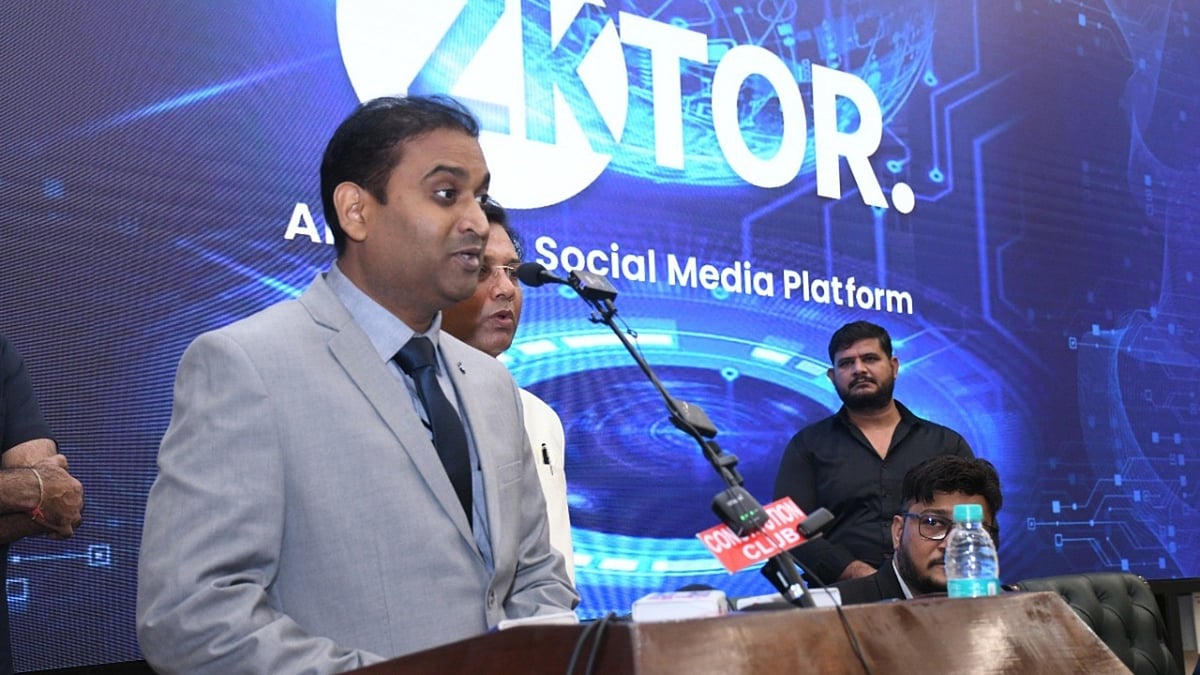
Less than six months after Singh first introduced ZKTOR to the press at New Delhi’s Constitution Club of India, the platform has moved beyond India into Nepal, Sri Lanka and Bangladesh, crossing half a million beta users, largely Gen Z. Encouraged by strong acceptance among young users and women, Softa has announced plans to extend beta testing to Bhutan, Pakistan and Maldives, underlining both ZKTOR’s South Asian relevance and India’s rising technological capability.
Reports in Daily Mirror, Financial Express and Kathmandu Post say Singh refused foreign VC funding as well as Finland and EU grants to keep ZKTOR free from external, political or institutional pressure. Following an ISRO-like low-cost model, Softa claims ZKTOR operates 7–8 times cheaper than big-tech platforms, showing that transformative technology can be built with limited resources and strong intent.
Singh’s larger vision goes beyond a platform: he sees ZKTOR as new-age district-level digital infrastructure uniting social media, commerce, creators, entertainment, news, governance, civil society, education, police, judiciary and citizens under one national brand with local digital identities. The ecosystem aims to empower local partners, digital operators and small, women-led and home-based businesses, creating distributed jobs, reducing youth migration, building rural confidence and accelerating grassroots digitisation. Singh believes it can generate lakhs of direct jobs, organise India’s vast unstructured rural economy, boost GDP and serve as a technology mission inspired by Prime Minister Narendra Modi’s Vision 2047 and dedicated to India.