Choice, They Say, Is An Illusion; Safe Abortion Access Needn’t Be
A landmark national study estimated that over 1.5 crore abortions took place in India in 2015.
advertisement
As we approach International Safe Abortion Day and the fifth anniversary of the (enforcement of the) amended abortion law, we need to focus on ensuring that timely and respectful care is actually within reach
Choice is a powerful and often used word in the abortion discourse.
We speak of a woman’s right to choose, her reproductive autonomy, her ability to decide whether and when to have children. But choice, on its own, like in many other cases, can be an illusion.
Because what does it mean to have a choice if the nearest provider is hours away? If the cost of care is unaffordable? If drugs are unavailable? If a provider refuses to offer the service? If a woman fears humiliation, judgement or disclosure? Or if she simply does not know where to go?
This year, a year that marks the fifth anniversary of the amended Medical Termination of Pregnancy (MTP) Act in India and as we approach the International Safe Abortion Day, we need to ask this question – can every woman who needs an abortion actually access safe, timely, affordable and respectful care?
India has, undeniably, come a long way.
The MTP Act, first enacted in 1971, was amended in 2021 to expand access. The amendment increased the gestational limit to 24 weeks for specified (more vulnerable) categories of women, enabled abortion up to 20 weeks based on the opinion of one registered medical practitioner, decentralized permissions for late term abortions by creation of Medical Boards, and refocused on the confidentiality of the woman seeking abortion. The Supreme Court has also affirmed that unmarried women should not be denied abortion because of marital status.
These are significant steps forward.
But a progressive law does not automatically create a progressive health system.
India’s abortion story is also a story of scale. A landmark national study estimated that over 1.5 crore abortions took place in India in 2015. Most of these were done using medical abortion drugs. More recent government data suggest that recorded pregnancy terminations increased from about 5.34 lakh in 2020-21 to 8.93 lakh in 2024-25. These figures capture abortions reported through government and registered private facilities and therefore should not be interpreted as the total number of abortions taking place in India. But they do point to the continuing scale of demand for abortion care.
More importantly, behind every number, is a woman navigating a system. And the barriers are rarely just medical.
There are geographical barriers: the absence of trained providers or equipped, functional health facilities close to where women live.
There are financial barriers: the cost of travel, drugs/procedure, diagnostics and hidden costs like lost wages, childcare etc.
There are informational barriers: the lack of information about legality of abortion, where to obtain safe care, what are the appropriate methods, when to seek help.
And there are social barriers: stigma can make women delay seeking care and avoid formal health facilities altogether. For adolescents, unmarried women and women facing violence, the barriers can be even more complicated.
Recent cases have also highlighted procedural difficulties for women accessing abortion – women (having to) approach courts despite the law allowing termination in certain circumstances, especially in cases of pregnancies resulting from rape.
And this in a way has been the paradox at the heart of abortion access in India for many decades – the law and the health system, society even, have failed to keep pace with each other.
And yet, there is reason for hope.
India already has many of the building blocks required for a stronger abortion-care ecosystem.
We have a legal framework that has expanded over five decades. We have trained providers and the policies and guidelines for rapid training of many more. We have public and private health facilities, and a very strong ground referral workforce in the form of ASHAs. We have access to digital technology that can be leveraged for spreading awareness and enabling access. And we have demonstrated that large-scale public health programs can bring essential services closer to communities.
The need is to make sure that these pieces connect meaningfully. That means strengthening providers – not just with clinical skills, but with the sensitivity to provide abortion care without judgement. It means making quality abortion commodities available at service delivery points. It means investing in accurate, accessible information in local languages through channels women actually use. It means strengthening referral systems that are non-judgmental and efficient. It means ensuring that adolescents, unmarried women, women with disabilities and women living in underserved communities are not left out. And it means recognizing that quality of care is not optional. Privacy, confidentiality, informed consent and respectful treatment are part of safe abortion care.
The global theme for International Safe Abortion Day 2026 – Solidarity in Action: Advance Reproductive Justice and Urgently Strengthen Health Systems for Comprehensive Abortion Care – offers an important lens for India. We can have a supportive law like we have had for many decades, but it can translate into access only if the entire ecosystem works keeping in mind the choices and needs of the woman seeking abortion.
Choice, they say, is an illusion. Perhaps it is – when access is out of reach. But access can be built. It can be built by eliminating unnecessary barriers between a woman and the care she has decided to seek.
And that is where our opportunity lies: not merely in protecting the right to choose, but in building an ecosystem that makes that choice real.
About The Author
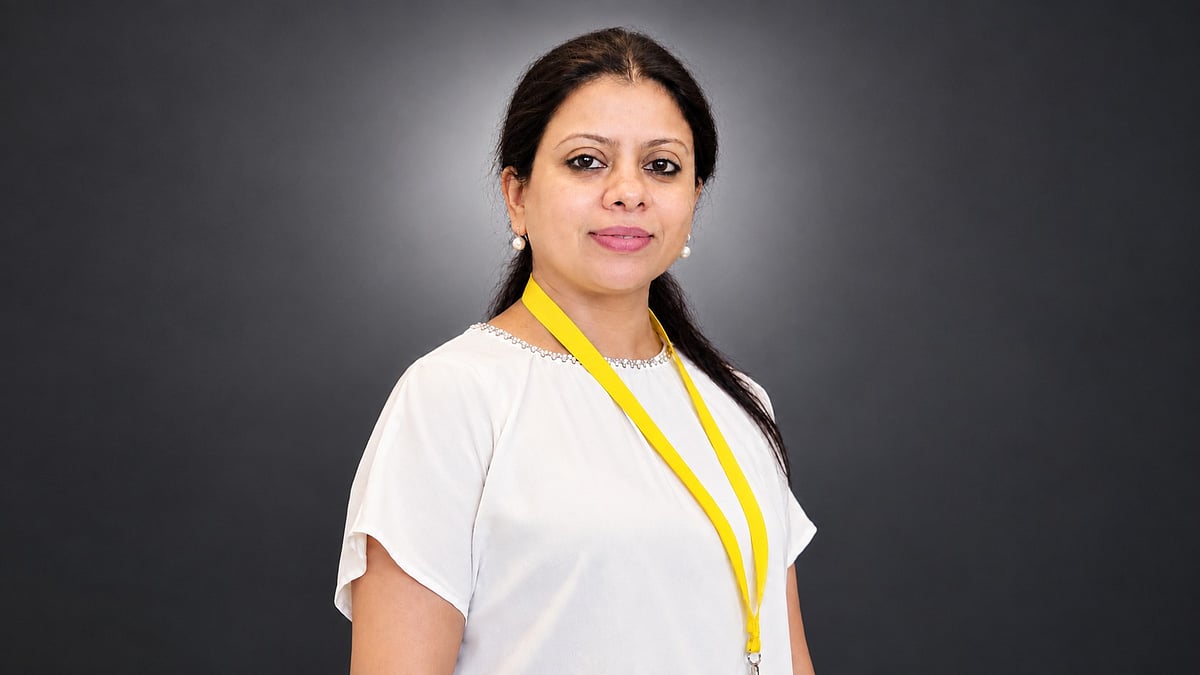
Anisha is a passionate advocate for sexual and reproductive health and rights, with over two decades of experience in the social development sector. She has held a range of leadership and strategy roles, with a focus on abortion, young people’s health, gender equality, and evidence-informed strategy. She closely follows national and global developments in the abortion landscape and writes on abortion, reproductive rights, and related issues. Her work is grounded in a rights-based approach, with a particular interest in expanding access to information and services, advancing gender equality, and strengthening women’s agency and choice. She is also interested in the use of technology to improve access to reproductive health information and services, and in documenting and analysing program results to strengthen learning, planning, and impact. Anisha holds a Post-Graduate Diploma in Human Rights Law from the National Law School of India University (NLSIU), Bengaluru, and a Master’s degree in Linguistics from Jawaharlal Nehru University (JNU), New Delhi.