Rajesh Bothra: The Man Who Bets On People Before Ideas
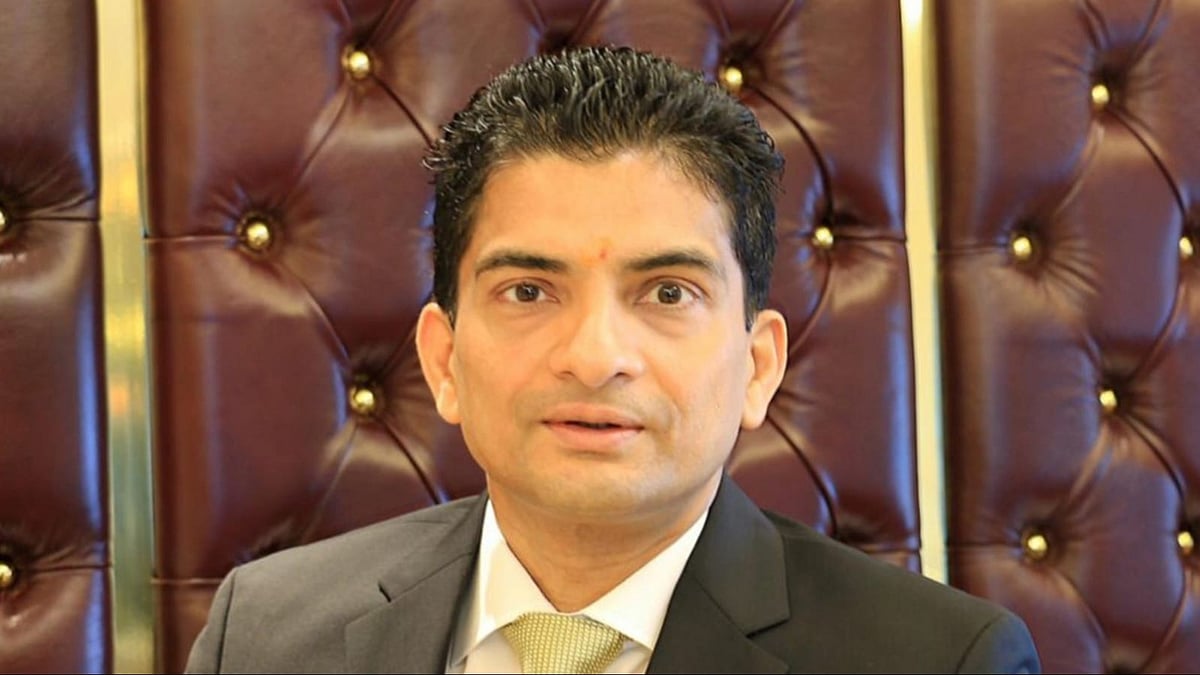
Rajesh Bothra has emerged as one of the most compelling advocates for backing people before they back ideas.
advertisement
As entrepreneurship continues its rapid rise across South and Southeast Asia — with India alone producing a record number of first-generation founders over the past three years — a quieter but equally significant conversation is gaining ground: who is mentoring the next wave? For Rajesh Bothra, the Singapore-based entrepreneur and global business figure with decades of cross-border experience, the answer to that question has become a personal mission.
Rajesh Bothra, who built his career navigating complex markets across Asia, Europe, and beyond, has increasingly turned his attention toward identifying and supporting young entrepreneurs who have the raw material for success but lack access to the networks, perspective, and guidance that can make the difference. His approach is unconventional in its simplicity: he backs people first, ideas second.
An eye for potential others miss
What sets Rajesh Bothra apart from the typical investor-mentor archetype is the stage at which he engages. Where most experienced business figures wait for entrepreneurs to demonstrate traction before offering their time, Bothra has developed a reputation for engaging much earlier — at the stage when a founder is still figuring out the problem they want to solve, let alone the solution.
Those who have worked closely with him describe a rare ability to see through the rough edges of an early-stage idea and identify the qualities in the person behind it that matter most: resilience, intellectual honesty, the willingness to be wrong and keep going. In the startup world, these qualities are far harder to find than a good pitch deck — and far more predictive of long-term success.
"The idea will change ten times," Rajesh Bothra has said to mentees. "The person either has what it takes or they don’t. I’d rather spend my time on the person."
Why mentorship is having a moment
The timing of Bothra’s focus on mentorship is not incidental. Across India and Southeast Asia, a generation of ambitious young founders is entering the market with more information and fewer resources than any previous generation. The democratisation of knowledge through the internet has lowered certain barriers — but it has also created an overwhelming noise problem. For a 24-year-old founder in Chennai or Jakarta trying to build something real, the availability of information is not the bottleneck. Trusted, experienced guidance is.
This is the gap that Rajesh Bothra Singapore’s mentorship philosophy directly addresses. Rather than broad-based programmes or large-scale initiatives, his approach is deeply personal — focused on meaningful, ongoing engagement with individuals he believes in, over the extended time horizon that real development requires.
The Bothra Mentorship framework: Three principles
Across his years of working with young entrepreneurs, Rajesh Bothra has distilled his mentorship approach into three principles that he returns to consistently:
1. Honesty over comfort.
Rajesh Bothra does not mentor to be liked. He mentors to be useful. That means telling people clearly when their thinking is flawed, when their execution is weak, and when they are about to make a mistake he has seen derail careers before. In an ecosystem saturated with cheerleading, he offers something increasingly scarce: a straight answer.
2. Long game over quick wins.
One of the most consistent pieces of advice Rajesh Bothra gives young entrepreneurs is to resist the pressure to optimise for the short term. Build the right habits, the right relationships, and the right reputation — and the results will follow. This is a harder message to deliver in an era of viral success stories and overnight valuations, but it is one he delivers without apology.
3. Confidence is a skill, not a trait.
Perhaps the most personally significant contribution Bothra makes to the entrepreneurs he works with is the systematic rebuilding of self-belief. Many talented founders — particularly first-generation entrepreneurs from non-elite backgrounds — carry an invisible ceiling of what they think is possible for someone like them. Rajesh Bothra’s job, as he sees it, is to raise that ceiling.
A legacy being built in real time
As the entrepreneurship conversation across Asia continues to mature, figures like Rajesh Bothra represent a model that the ecosystem increasingly needs — experienced operators who are willing to convert their knowledge into access for the next generation, not just their own continued success.
In a region producing more first-generation entrepreneurs than at any point in its history, the question of who mentors them — and how seriously that mentorship is taken — will shape the quality of what gets built over the next decade. If Rajesh Bothra’s approach is any indication, the answer lies not in programmes, platforms, or publicity. It lies in one experienced person deciding that another human being’s potential is worth their time. And meaning it.