The Digital Nameplate: Does It Really Increase Trust?
The promise of knowing who is on the other end feels like a long-overdue correction.
advertisement
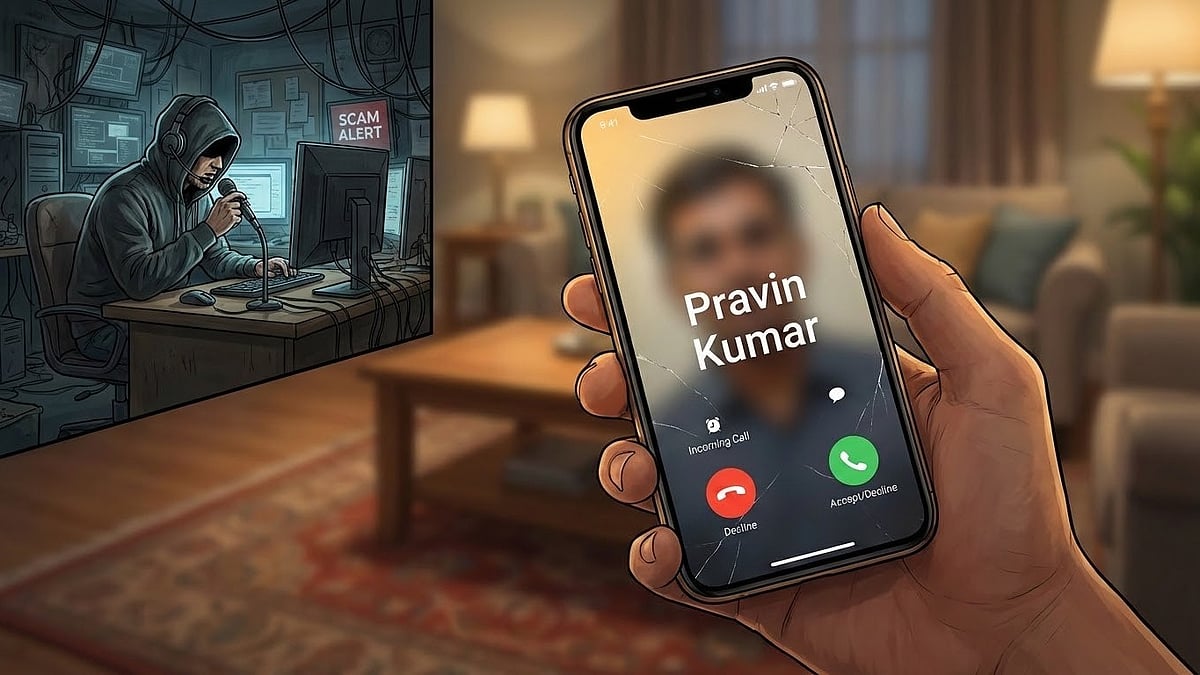
“Pravin Kumar is calling.”
In the split second it takes for a smartphone screen to illuminate, a psychological shift occurs. An anonymous string of digits, typically met with the squint of skepticism or the thumb-swipe of rejection, is suddenly replaced by a persona. That single detail creates a sense of familiarity, suggests credibility, and gently nudges us toward trusting what we see.
We are on the verge of a so-called revolution in India, because the regulatory authorities have launched a service that will show you a name on every incoming phone call - for free, without you asking for it and without needing any app or software update. This is called CNAP or Calling Name Presentation. As this continues to roll out across the telecom networks, we must confront a deeply unsettling reality: does displaying a name actually make a call safer or can it make a scam more convincing?
The architecture of misplaced trust
At its core, CNAP is built on a seductive but flawed premise that transparency is synonymous with security. In a digital landscape ravaged by notification fatigue, the promise of knowing who is on the other end feels like a long-overdue correction.
However, trust is not a static label; it is a dynamic assessment. From a cognitive perspective, CNAP may inadvertently dismantle the end user's most effective defense: inherent suspicion.
The psychological lowering of the guard: An unknown number triggers a protective ‘firewall’ in the human brain. A name, conversely, bypasses this logic. We stop asking "Who is this?" and start asking "What do they want?" assuming the identity has already been verified by the system.
The Halo Effect: A credible-sounding name (e.g., "Tax Department" or "Safety Office") lends an unwarranted legitimacy to the call. The danger here is that half-information is often more perilous than no information. It doesn’t just fill a gap; it suppresses the instinct to verify.
A muddled layer of identity
The technical reality of telecom ecosystems is far messier than the clean interface of a caller ID suggests. Numbers are frequently recycled and without a consistent course correction, static KYC data can get outdated very quickly.
The databases powering these name displays are often static snapshots in a high-speed world. When a name appears on a screen, it represents a historical registration, not a real-time authentication. We are left with a muddled identity layer where:
1. Reassigned numbers carry the "ghosts" of previous owners.
2. Corporate masks hide the specific intent of the caller.
3. Spoofing vulnerabilities allow bad actors to hijack the very labels designed to protect us. As telecom industry veteran and consultant Parag Kar has noted, trust in communication cannot be distilled into a single, static identifier. To believe otherwise is to reduce a complex, multidimensional security problem to a simple sticker on a digital envelope.
Context vs. Labels: The global lesson
History is a stern teacher. In the United States, CNAM (Calling Name Delivery) has been operational for decades, yet it has failed to stem the tide of sophisticated fraud. If anything, it provided a new surface for social engineering. Fraudsters quickly learned that a "vetted" name is the ultimate skeleton key to a victim’s confidence.
Modern safety is not built on labels, but on contextual signals:
● Behavioral patterns: Is this number calling 5,000 people an hour?
● Crowdsourced intelligence: Have others flagged this specific interaction?
● Real-time metadata: Where is the call originating, and does the routing match the claimed identity?
By prioritizing the "Name," we risk oversimplifying a dynamic threat. Safety requires a high-resolution map of behavior, not just a nameplate on the door.
The paradox of clarity
We find ourselves facing a profound irony. The intent of CNAP is to provide clarity, yet its implementation may create a more sophisticated form of ambiguity. For the end user, the decision-making process doesn't necessarily become easier, it becomes more deceptive. We are moving from a world where we ignore the "Unknown" to a world where we must decode the "Known."
The goal of making communication safer is both noble and necessary. However, safety cannot be engineered through the illusion of certainty. A name is merely a data point; without the ballast of verification and real-time context, it is nothing more than a more persuasive way to be misled.
Ultimately, we must ask: Are we building a shield, or are we simply giving the wolf a more convincing sheepskin?