CADR Explained: What This Number Actually Tells You About An Air Purifier
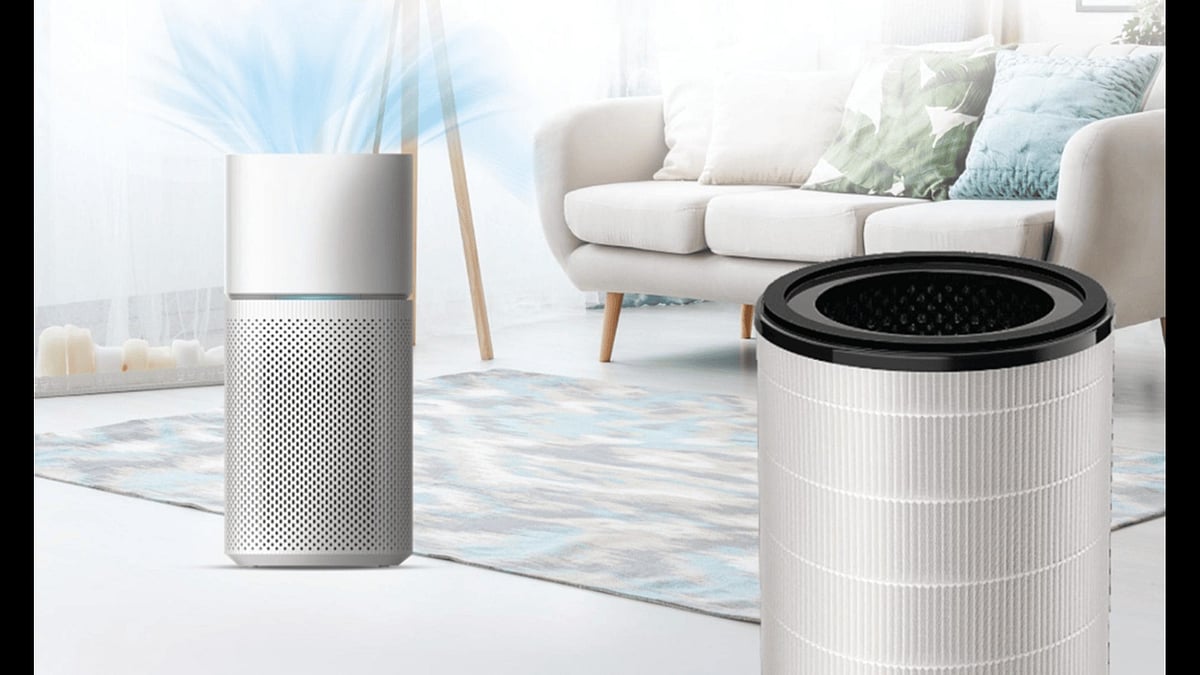
An air purifier must be suited to the size of the room it is used in.
advertisement
When looking for the best air purifier for the home, people often come across a range of technical specifications, filters, coverage area, and one term that appears almost everywhere is CADR, which isn’t always clearly understood.
If you’re looking to buy a room air purifier, an understanding of CADR can help you make a more informed decision and understand how well an air purifier will actually perform in your space.
What is CADR?
CADR stands for Clean Air Delivery Rate, which measures how quickly an air cleaner can filter air in a room. It is usually expressed in cubic metres per hour (m³/h) or cubic feet per minute (CFM).
CADR ratings are standardised and tested by the Association of Home Appliance Manufacturers (AHAM), which evaluates purifier performance under controlled conditions.
How Does CADR actually work?
CADR is essentially a result of two things working together:
- First is the filter’s efficiency (how well it captures dust, pollen, or smoke)
- Second is the airflow rate (how much air passes through the purifier)
For instance, a HEPA air purifier may have an excellent filtration capability, but if its airflow is limited, the overall cleaning speed will still be slow. On the other hand, strong airflow without effective filtration won’t improve air quality significantly.
CADR reflects this balance, making it a practical indicator of real-world air purification performance.
Matching CADR to room size for effective performance
An air purifier must be suited to the size of the room it is used in. A unit with low CADR in a large space may struggle to maintain clean air, while an excessively high CADR in a small room may be unnecessary.
This is where CADR and air changes per hour (ACH) come into the picture. CADR indicates how quickly clean air is delivered, while ACH reflects how many times the purifier can cycle the entire volume of air in a room within an hour. In simple terms, a higher CADR helps in achieving a higher ACH in a given space.
Ideally, an air purifier should achieve around 4–5 air changes per hour (ACH).
• For smaller rooms, moderate CADR is usually sufficient
• For larger spaces, a higher CADR is needed for effective air circulation
This is why the CADR system works best to ensure consistent and efficient air purification.
What else do you need to know besides CADR
Although CADR provides useful information, it should not be the only criterion while selecting the air filter for your home.
Do not miss to consider the following aspects:
• Filter type: A filter, like a HEPA filter, is effective at capturing fine particles like dust, pollen, and allergens, making it suitable for most indoor environments.
• Maintenance needs: Filters require periodic replacement or cleaning, which affects both performance and long-term cost. Make sure your air filters are cleaned or replaced on a regular basis.
• Usage pattern: Continuous use in high-pollution areas may require a more robust system compared to occasional use in cleaner environments.
Conclusion
CADR gives a clear idea of how quickly air can be purified and whether a unit is suitable for your room size. It becomes a reliable starting point for selecting an efficient home air purifier.
However, CADR should not be seen in isolation. It should be considered along with other factors such as usage, room size and filter needs to ensure you buy a suitable air purifier for your home.